


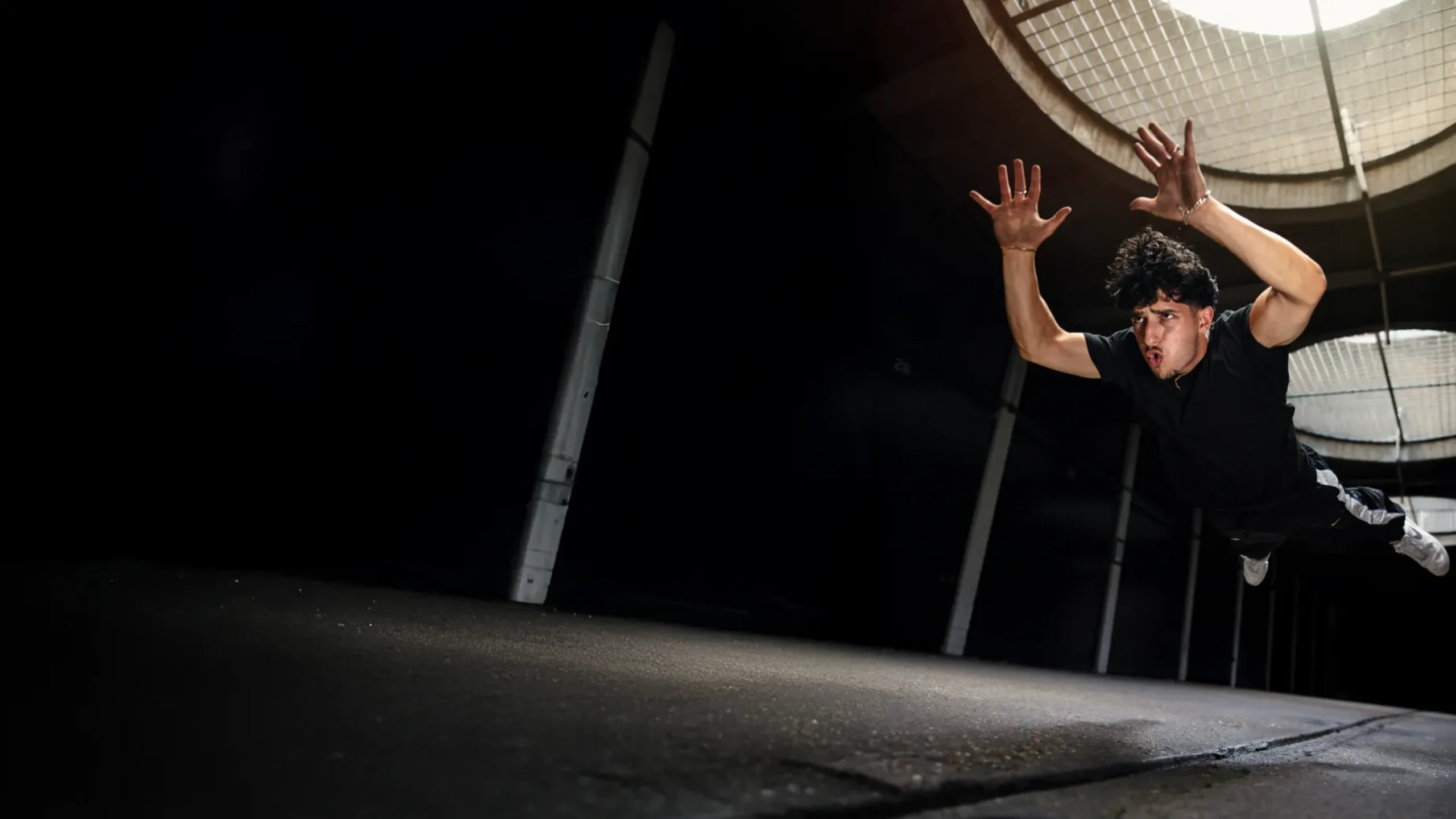
In a quiet corner of a London park, a group of young people are hanging from bars, balancing on rails, and moving their bodies with fluid precision. There’s no equipment beyond what the urban landscape provides. No gym fees. No barriers. Just bodies, movement, and connection.
Leading the session is Demetri Alvanis – an international calisthenics champion, and the founder of The Calisthenics Academy, an initiative that’s reimagining fitness as something everyone can access. For Demi, as he’s known to all, calisthenics was more than just a workout – it was a lifeline. “Gyms weren’t really an option when I was younger – you needed a membership, and you had to be at least 16 or 18 to join. Calisthenics gave me freedom. All I needed was a park and my own body.”
Free movement
That sense of liberation and self-expression has shaped his philosophy. Rooted in street culture, music, and creative movement, calisthenics blends functionality with flair. “It’s artistic, rhythmic, and even dance-like at times,” he says, drawing parallels with capoeira and other cultural disciplines that straddle sport and art.
Demi’s own journey began in his teens. He was active, but uninspired by rigid PE lessons. “I didn’t enjoy school sport. It wasn’t until I found calisthenics that I realised movement could be fun and freeing.” By 2020, he’d claimed multiple calisthenics titles. But rather than chasing medals, he focused on building community – from grassroots school and university programmes to city-wide outdoor classes.
Not everyone can afford a gym – but everyone deserves to feel strong
“You’ll see people in parks from ages 5 to 90 training side by side.” That intergenerational, communal spirit is central to his work. Through The Calisthenics Academy, Demi hosts free events and training sessions in public parks, offers mentorship to young people, and creates peer-led teaching opportunities. The initiative was born from a simple idea: movement should be open to all. “Not everyone can afford a gym – but everyone deserves to feel strong in their own body,” he adds. “Calisthenics removes the gatekeepers.”
Calisthenics class structure
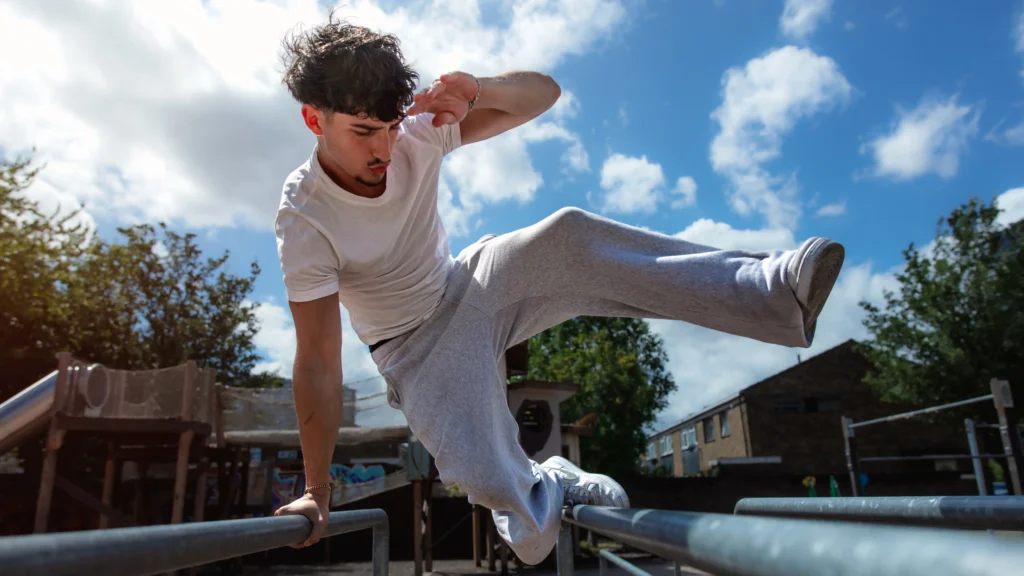
Classes begin with full-body mobility work before splitting into ability-based stations. “One person might be trying a plank, another perfecting a pull-up – where the outdoor gym or landscape allows it – while a third hangs from the bar building grip strength,” explains Demi. “There’s always a next step. That’s what makes calisthenics so powerful – you’re constantly learning, progressing, and surprising yourself.”
That progress isn’t just physical. For Demi, it’s about mental transformation too. “Before I started, I felt weak – like I didn’t own my body. But calisthenics changed that. It gave me confidence. It taught me patience and resilience. You can’t fake a one-arm handstand. You have to earn it.”
Crucially, calisthenics also shifts the emotional landscape for those who’ve been alienated from traditional sport. “When I teach in schools, I see kids who’ve never connected with PE suddenly light up. They realise they can move, they can enjoy exercise. It’s playful, it’s expressive and it breaks the mould.”
Now, through The Calisthenics Academy, Demi is scaling that impact. His model is simple but effective: free, local, community-led events and training supported by volunteers and peer mentors. He’s already seeing ripple effects – participants becoming coaches, new groups launching in other cities, and a growing network of people reclaiming public space for health and connection. “Even in our digital era, there’s something powerful about training face-to-face – about showing up for each other in real life.” That human connection, he says, is the foundation of lasting change.

Demetri Alvanis is a UK-based calisthenics athlete and coach and the founder of The Calisthenics Academy