








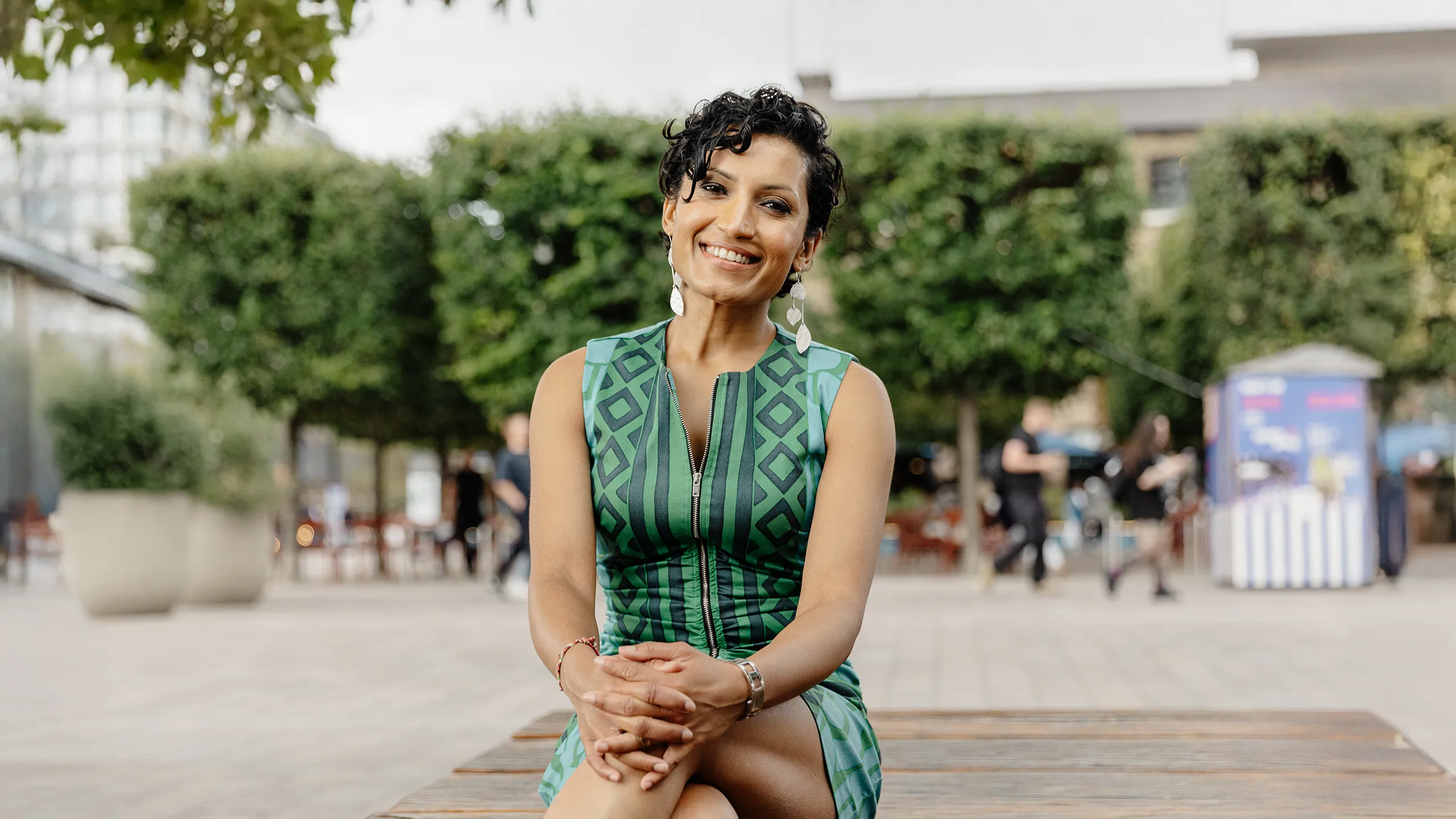
The health of our children is shaped by everything from the air they breathe to the everyday pressures on family life, says paediatrician Dr Guddi Singh. But the basics are more powerful than you think. What can parents really do to support their children’s physical and emotional wellbeing? Dr Guddi cuts through the noise to reveal what really matters.
What are the most powerful forces that shape a child’s health?
When people think about child health, they often think about doctors, hospitals, medicines and check-ups. Of course those matter – I’m a paediatrician, so I’m not about to put myself completely out of business! But the biggest forces shaping a child’s health are usually much more ordinary: the home they sleep in, the food they eat, the air they breathe, the school they attend, the streets they play on, and whether the adults around them have enough time, money and support to care for them.
Health is not something that begins in a clinic. It begins in a cot, a kitchen, a playground, a classroom, a bus route, a family budget. I sometimes say that children’s health is like a garden: a doctor can treat a wilting plant, but if the soil is poor, the light is missing and nobody can afford water, we shouldn’t be surprised when children struggle to thrive.
What are the most important “foundations” of child health that parents can realistically focus on day to day?
I’d focus on five basics: sleep, food, movement, connection and routine.
That does not mean creating a perfect Instagram childhood with colour-coded snack boxes and woodland walks at sunrise. Most families are doing their best in very difficult circumstances. But children do well when life feels reasonably predictable: regular meals, enough sleep, chances to move their bodies, time outdoors where possible, and adults who are emotionally available.
My motto is: Hugs will save the world! By which I mean that the most powerful foundation is probably loving connection. Children need to feel safe, seen and enjoyed. A bedtime story, a silly dance in the kitchen, a chat on the walk home from school – these things are not “extras”. They are part of the architecture of health.
Are there small, practical changes parents can make that have a surprisingly big impact on wellbeing over time?
Yes – tiny things, repeated often, are magic.
Eat together when you can, even if it’s beans on toast. Let children help with food, even if they make a mess. Walk short journeys where possible. Have a regular bedtime rhythm: bath, book, cuddle, lights out – or whatever version works in your home. Get outside for ten minutes. Put phones away for one small pocket of the day and give children your full attention.
One of my favourite pieces of advice is: connection before correction. If a child is melting down, angry or refusing to cooperate, start by asking, “What’s going on underneath this?” rather than “How do I stop this behaviour?” Children are not machines. They are little nervous systems trying to make sense of a very overstimulating world.
Should parents worry if their child is a fussy eater?
Usually, no – at least not immediately. Fussy eating is incredibly common, especially in toddlers. Children are biologically suspicious of unfamiliar foods; from an evolutionary point of view, that probably helped stop them eating poisonous berries. Less helpful when you’ve spent 45 minutes making lentil bolognese and they treat it like a biohazard!
The key is low-pressure exposure. Keep offering a range of foods, eat together where possible, and don’t turn every meal into a battlefield. Children often need to see, smell, touch or taste a food many times before accepting it.
Do seek help if your child is losing weight, choking or gagging often, has a very restricted diet, seems extremely anxious around food, or if mealtimes are becoming distressing for everyone. But for many families, the best approach is: keep calm, keep offering, and don’t let broccoli become a moral drama.
How can parents support children’s emotional health in simple, non-specialist ways at home?
The most important thing is to help children name what they feel. “You seem really cross.” “That was disappointing.” “I wonder if you’re worried about tomorrow.” When we name feelings, we make them less frightening.
Children also learn emotional regulation by borrowing ours. That does not mean parents have to be calm saints. I have yet to meet one. It means modelling repair: “I’m sorry I shouted. I was tired, but I shouldn’t have spoken like that.” That teaches children that relationships can bend without breaking.
Play is also emotional healthcare. So is laughter. So is being listened to. So is having one adult who thinks you are wonderful even when you are being extremely annoying.

Health is not something that begins in a clinic. It begins in a cot, a kitchen, a playground, a classroom, a bus route, a family budget
What modern-day pressures do you see affecting children most often, and how do they show up clinically?
The big one I see is overwhelm – in children and in parents. Many children are tired, anxious, sedentary and overstimulated. Screens are part of that picture, but they are not the whole story. Sometimes screens are blamed when the deeper issue is that children have nowhere safe to play, parents are exhausted, and family life is under huge pressure.
Clinically, this can show up as tummy aches, headaches, poor sleep, meltdowns, school refusal, low mood, eating difficulties or worsening behaviour. Children don’t often say, “I’m anxious about the state of the world and my nervous system is overloaded.” They say, “My tummy hurts,” or they kick off over the wrong socks.
So we need to get curious, not judgmental.
What would you say to parents who feel overwhelmed by conflicting advice?
I would say: please breathe. You are raising children in a world that has turned parenting into a competitive sport and then sold you equipment for it.
There is so much advice – on sleep, food, phonics, feelings, screens, sugar, discipline – that parents can feel they are failing before breakfast. But children do not need perfect parents. They need “good enough” adults who love them, notice them, apologise when they get it wrong, and keep showing up.
If advice makes you feel ashamed, panicked or inadequate, be suspicious of it. Good health advice should give you confidence, not crush you.
Where do you think the healthcare system goes wrong?
Healthcare is very good at treating disease, but not always good at understanding life.
A child might come to clinic with asthma, but the real problem may be damp housing. They might be gaining weight, but there may be no safe green space nearby. They might be anxious, but they may be living with poverty, racism, family stress or school pressure. If we only look at symptoms, we miss the story.
Children need more than appointments. They need safe homes, good food, clean air, play, education, friendship, community and hope. Those are not soft things. They are health infrastructure.
Are we treating symptoms while leaving root causes untouched?
Yes. Every day.
We tell children to eat well, then allow families to live in food poverty while the price of basics soar. We tell them to exercise, then close youth centres and leave playgrounds unsafe. We tell teenagers to ask for help, then make them sit on waiting lists for years. We tell parents to provide stability, then build an economy that makes family life insecure.
A more honest system would admit that health is political – not party political, but about how power, money and opportunity are distributed. It would invest much earlier in children, families, schools, housing, green space and community support. It would bring doctors, teachers, councils, youth workers and families together instead of leaving everyone in separate silos.
Most importantly, it would listen to children and parents. They are not the problem to be fixed. They are experts in what their lives are really like.
 Three simple principles for supporting their child’s health and development
First love them loudly. Children need to know they are delighted in, not just managed.
Second protect the basics. Sleep, food, movement, play, routine and connection are not glamorous, but they are powerful.
Third don’t try to do it alone. Children were never meant to be raised by one or two exhausted adults in isolation. Find your village where you can – family, friends, school, community groups, faith spaces, sports clubs, libraries. And if the village isn’t there, we should be asking much bigger questions about why.
The health of children is everyone’s business. Parents matter enormously – but they should not be left carrying the whole world on their shoulders.
Dr Guddi Singh
A paediatrician, broadcaster and researcher working to reimagine child health. Follow her