










Protein has become one of nutrition’s most talked-about nutrients – and one of the most misunderstood. While guidelines still lag behind the science, many of us are under-eating protein without realising it. Dr Rupy Aujla explains why that matters, how needs shift with age and activity, and how to build a healthy, plant-forward high-protein diet that actually works:
“Think of protein as the body’s Lego – it’s the building block of almost everything biological,” Dr Rupy explains. “Just like Lego bricks can become cars, castles or spaceships, the amino acids in protein help build everything from immune cells to hormones, bone, organs, haemoglobin, carrier molecules and – yes – muscles. Yet only around 25% of the protein we eat actually goes to muscle. The rest supports vital systems like blood, hormones and enzymes.”
How much protein do we actually need?
“So why are we not eating more of it? Government guidelines still suggest 0.75 – 0.8g of protein per kilogram of ideal body weight per day. That means someone with an ideal weight of 80kg is recommended just 60–64g of protein a day. But the latest research suggests this isn’t enough – especially as we get older, go through hormonal changes, or exercise regularly. A more realistic and beneficial range for most active adults is 1.2 – 1.6g per kg of ideal body weight. Post-menopausal women, over-50s, pregnant women (because you are building another human), breastfeeding mums (for milk supply) and regular exercisers often need even more.
Over the age of 50, we need more protein because we can’t absorb as much protein from our diet. Our digestive enzymes have changed, so we don’t break down these proteins and absorb them. Our muscles need more of a stimulus to respond to protein, as do our other organs. Our microbes also change, which means we can’t break down proteins as well. Post-menopause, we also need more protein for the hormonal stimulus.
Some experts are recommending one gram of protein per pound of body weight – that’s quite a high amount of protein, which I don’t think is a bad thing. But for the majority of people, trying to consume what is, in metric terms, 2.2 grams of protein per kilogram of body weight, runs the risk of over-consuming energy in the form of calories, which can lead to putting on weight. So if you start going for those higher amounts of protein, you have to be quite careful about not over-consuming energy that could lead to weight gain.
I think a good middle ground will be anywhere between 1.2 and 1.6 grams per kilogram of bodyweight. As someone who exercises regularly, three times per week, doing resistance and HIIT training, I aim for 1.5 to 1.6 grams, as much as possible. Active people absolutely need to eat more protein because you need to replenish the muscles that you are constantly breaking down by doing exercise.”
For a healthy person, consuming more protein will not have any negative effects
Warning signs
“Cravings are one sign you might not be getting enough protein. Others include weight gain, brittle nails, brittle hair, fatigue and low energy. Long term, particularly as we age, sub-optimal protein intake can result in muscle wasting, frailty, brittle bones due to poor bone mineralisation, hormonal issues, and compromised immune health. Insufficient protein intake can even impact our longevity.
An unexpected benefit of eating more protein is you start craving less, and weight maintenance becomes easier, particularly when you start eating protein at breakfast – your cravings fall off a cliff. When I was under-consuming protein, I’d always have sugar cravings and want to snack mid-morning. That’s a side effect of not consuming enough protein, particularly at breakfast. When you’re eating enough, you don’t get that hunger signal, because when you consume protein, it releases different peptides (one of which is GLP-1), particularly if you’re having protein with fibre.
If you don’t consume enough protein, there is a hypothesis that your body will keep that hunger signal on, and force you to eat to get that protein because, from an evolutionary point of view, protein is so important to every aspect of our physiology – it’s what our bodies are literally made up of.”
Can you eat too much protein?
“For a healthy person, consuming more protein will not have any negative effects. There used to be an idea that consuming too much protein would damage your liver or kidneys – I don’t believe that’s true. The main risk is consuming too many calories, which can lead to weight gain, and then to metabolic issues. I think it also depends on where you’re getting your protein from. So if you were having a lot of protein from, let’s say, red meat, and you are substituting that for high fibre options, then you potentially run the risk of under-consuming nutrients, such as fibre, which we know can have some negative consequences.
And no – more protein doesn’t have to mean more meat. You just need enough total protein, consistently, across meals. The key is knowing your ideal weight and calculating accordingly. There are handy online tools for that, including a free calculator on the Doctor’s Kitchen website. A healthy high protein diet is about getting enough protein, supporting your gut and reducing inflammation. And the way I do that is with a plant-forward diet.
I have a balance of around 70/30 or 80/20 in terms of plants to meat consumption. I certainly think you can have lean meat in your diet, lean red meat, lean white meat, lean fish or oily fish. It’s a lovely balance because you’re getting easily absorbable protein from meat, but you’re also getting a lot of fibre as well.”

Plant protein
“You can get all your protein from a plant-based diet. But it does require a lot of thinking. You’re going to be thinking about soy, you’re going to be thinking about tempeh, you need to think about nuts and seeds. Lentils are a source of protein, but they’re not a great source. They contain around 10 grams of protein per 100 grams. So you’d be consuming a lot of these products if you were going to be getting all your protein from plants. And some people are intolerant of things like beans and lentils, or need to work their way up to tolerate the amount of fibre in those. So it might require a bit of supplementation to get there initially, but I don’t think we need to rely on supplements.
My favourite sources of protein are oily fish, mackerel, herring, sardines, salmon, anchovies, tempeh, and extra firm tofu.
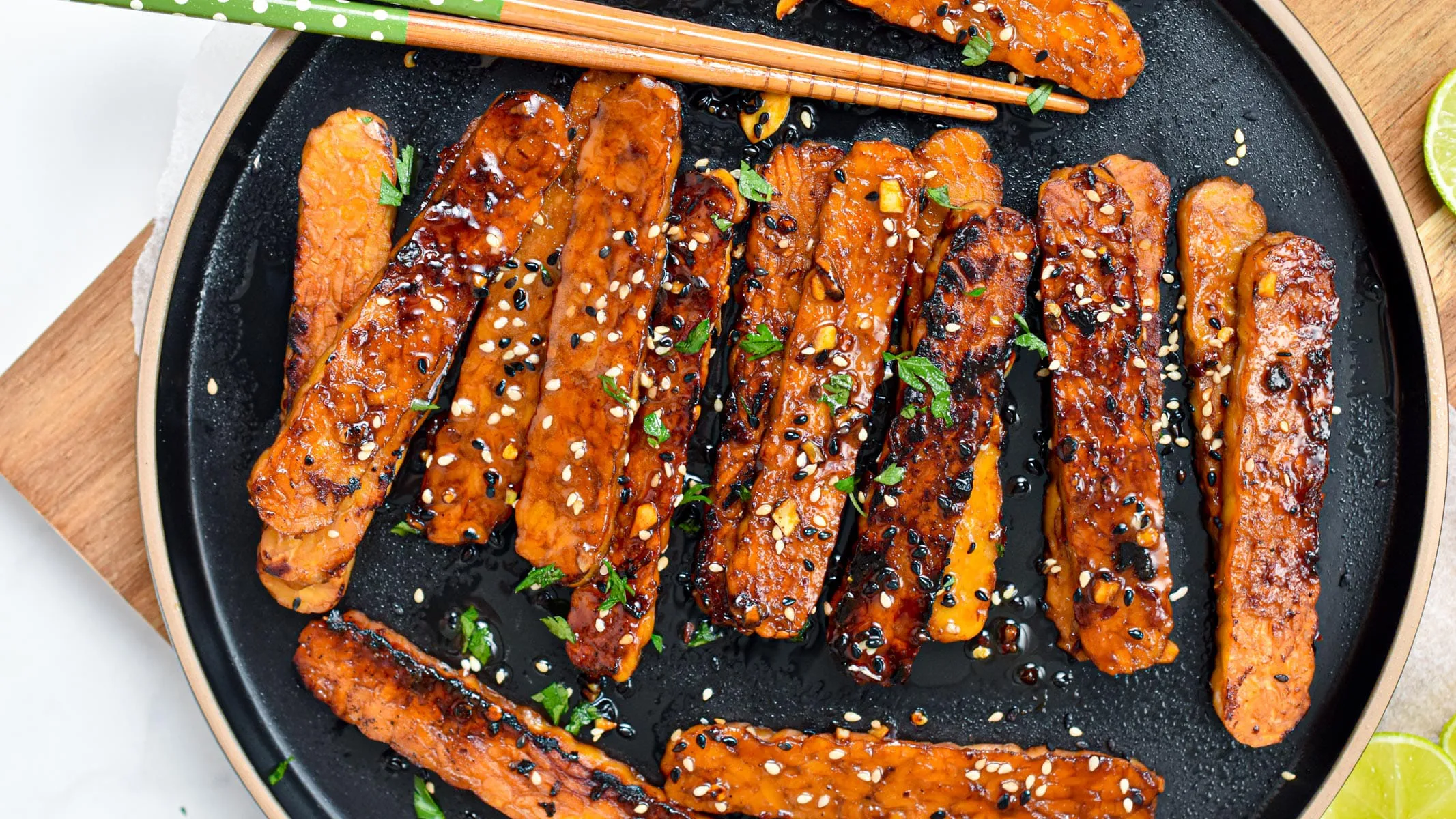
Tempeh is one of my all-time favourite plant-based proteins. It contains all nine essential amino acids in good amounts, plus fibre, isoflavones and phytonutrients that are anti-inflammatory and gut-friendly. It’s also incredibly versatile – it soaks up flavour beautifully and can be used in stir-fries, salads, or bowls.
Edamame is another excellent option. You can keep it in the freezer, blitz it up, and use it in lentil cakes or veggie patties. Then there’s tahini, peanuts, almonds, and shelled hemp seeds – one of my top picks. Hemp seeds are super nutrient-dense and work brilliantly in smoothies, sprinkled on salads, or on top of yogurt.”
The problem with protein bars and powders
“What about protein powders or bars? I don’t think they’re necessary for most people. They can be useful if you’re struggling to hit your protein target, especially on days that you train, but they shouldn’t replace whole food sources. The other issue is that they tend to be ultra processed, and contain emulsifiers, additives, flavourings and sugars that we know we shouldn’t be consuming. We need to eat enough protein, but not by any means necessary. It’s about getting enough in a healthy way. We want to get enough protein, support our guts, and reduce inflammation. So if we think about that as the formula, protein bars and powders fail on the last two, because they don’t support your gut – in fact, they can be detrimental to your gut. And they’re certainly not anti-inflammatory. They’re most likely going to be pro-inflammatory.
So I personally don’t rely on them, but I will use an unflavoured protein powder, usually a one- or two-ingredient one, made from a blend of pea and rice. You can get them from a variety of different plant sources. Always look for independent third party testing to ensure that they’re free of contaminants. And avoid the flavoured ones because they are full of sweeteners, which can cause gut issues.”
How to build a healthy high protein meal
“Core protein sources should be meat, fish or high-quality plant-based options like tofu, tempeh and edamame. Chickpeas, beans and lentils are useful but less protein-rich, so I call them “plant-based partners.” My simple formula for any meal? A core protein source, a plant-based partner, and a topper – like nuts or seeds. It’s an easy way to build balanced, satisfying, protein-rich meals. Nuts and seeds are one of my go-to snacks, too – a handful gives you eight grams of really good, accessible protein – and you can flavour them, too. There’s a useful chart and recipes in the book.
So whenever I’m having breakfast, for example, I’m thinking, okay, what’s the core protein source, what’s the plant-based partner, and what is the topper? And that way it’s easier to hit the numbers that most people need. For most people, we should be looking at 25 grams of protein every single meal, just based on weight. I personally need to be consuming closer to 35-40 grams. And this is a lovely little formula that I have in the back of my mind, just to make sure that we meet those targets.”
Get involved
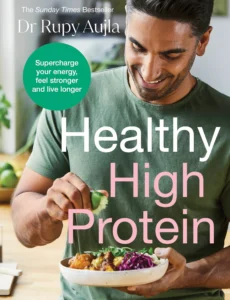
Dr Rupy Aujla is an NHS GP, author and founder of The Doctor’s Kitchen podcast and app. The Doctor’s Kitchen: Healthy High Protein: Supercharge your energy, feel stronger and live longer is out now.