









Location Saxony, Germany
Start Lieberthal
Finish Pirna
Distance 116km (72 miles)
Duration Six to eight days
Challenge Level 3/5
When to Walk April-October
Info saechsische-schweiz.de
Put yourself in the picture on a photogenic trail in the footsteps of artists, hiking amid forested hills and other worldly rock outcrops.
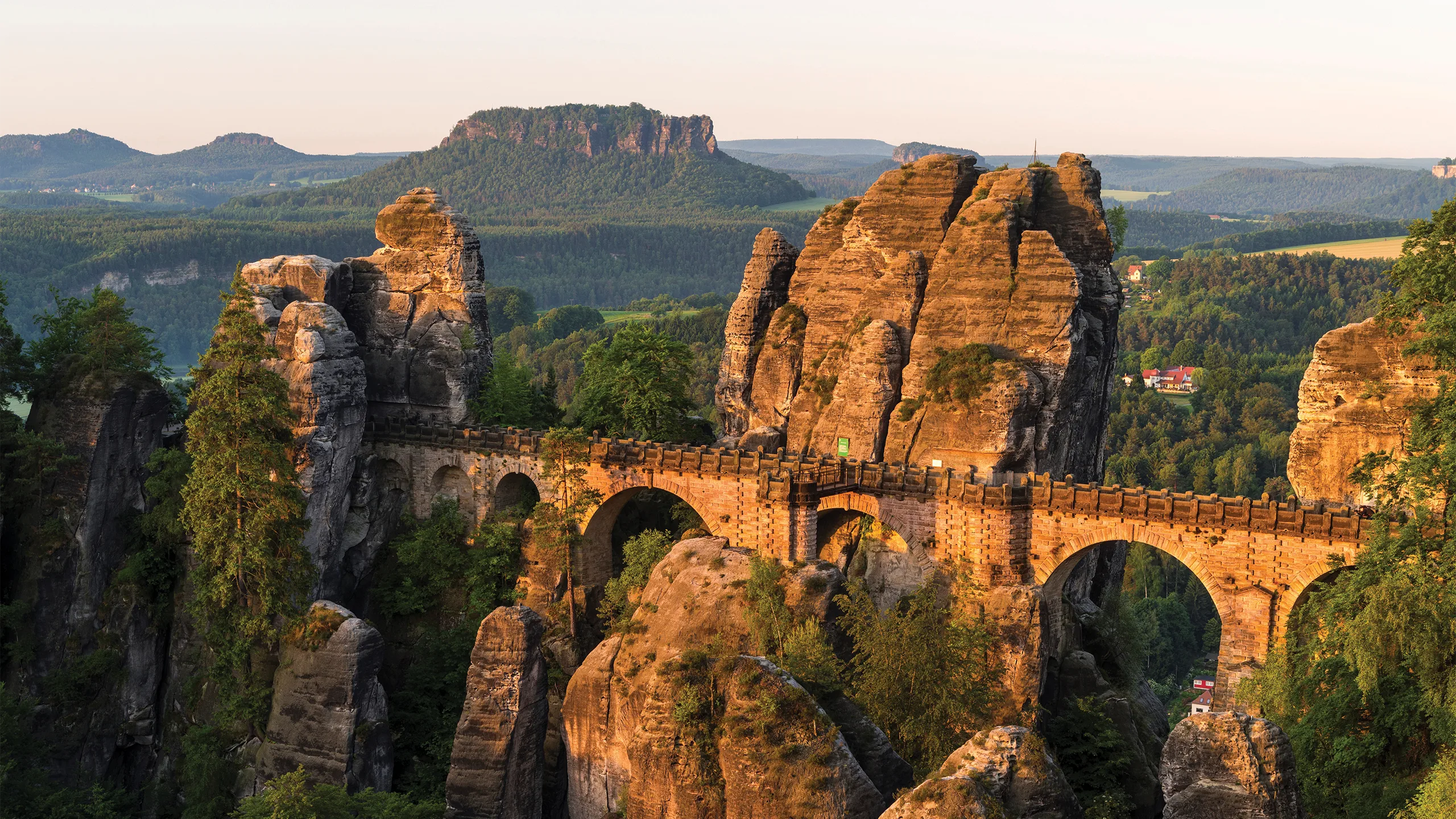
Not all mountains are made the same. The young but mighty Himalaya are metamorphic massifs, while billion- year-old chunks of continental crust underlie the Rockies. The volcanic Andes are quite different to the gleaming limestone shards of the Dolomites. Then there’s the belt of pinkish outcrops straddling the border between the German state of Saxony and Czech Bohemia, sculpted into all manner of strange and mysterious forms: tabletops and pinnacles and pillars and crags and many more. These are the Elbe Sandstone Mountains – or, to give the landscape its more fanciful but enduring local name, Saxon Switzerland.
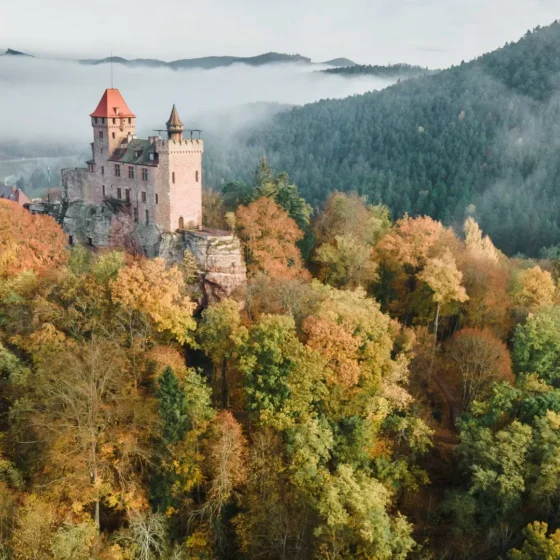
You need only spend a few minutes in this distinctive landscape to grasp what lured so many artists here, particularly from the 18th century when Romantic sensibilities came to the fore. It’s impossibly picturesque, and quite unlike almost anywhere else – no wonder it inspired the likes of painter JMW Turner, composer Richard Wagner and writers Mary Shelley and Hans Christian Andersen. Two decades ago, a walking route was waymarked, linking old paths tramped by those luminaries into a spectacular near-circuit starting just southeast of stately Dresden, Saxony’s historic capital.
Artistic rambling
The eight-stage Malerweg (Painters’ Way) weaves between many of the best-known viewpoints – and that means plenty of climbs. This isn’t a high-altitude range – the trail’s loftiest point is about 550m (1805ft) – so it can be hiked year-round. That said, ascents and descents can be steep, with plenty of metal steps, handrails and fixed ladders, so winter can make the going slippery, and summer brings crowds and sweaty conditions in the humid forests that cloak much of the range. In autumn, forests glow with turning foliage and burgeon with fungi, while honeypot attractions like the extraordinary Bastei formation are more peaceful.
Much of the route is wonderfully accessible by public transport, with trains, trams and even vintage steamboats serving various points along the Elbe River, making it easy to plan shorter segments or even day-walks. But if your diary permits, you won’t regret tackling the lot – if for no other reason than it’s a great excuse to refuel on the region’s many culinary delights, such as crisp white wines from Elbe vineyards and Saxon Eierschecke, a three-layered cheesecake custom-built for hungry hikers. You can savour these and more at Bergwirtschaft and Berggaststätte along the route – mountain cafes, often set atop high outcrops with amazing views, and perfect for mid-walk refreshment.
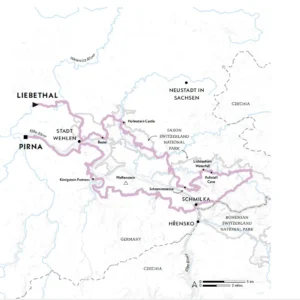
Walkers typically start at Liebethal and wind clockwise, visiting a lush gorge before descending to the fairy-tale riverfront town of Stadt Wehlen. Climbing once more, you reach the Bastei and the imposing castle at Hohnstein; then it’s on to the iconic crags of the Schrammsteine, the diaphanous Lichtenhain Waterfall and the Kuhstall (Cow Stable) Cave. Head back to the river, and nursery-rhyme-cute Schmilka, crossing the Elbe to hike back west via the gnarled Pfaffenstein tabletop (beloved of rock-climbers) and hulking Königstein Fortress before finishing with the easy amble into Pirna, with its castle, atmospheric old town and ample bars in which to toast your trek. Prost!

Get involved
Extract taken from Lonely Planet’s Where To Go When Hiking, written by Sarah Baxter and Paul Bloomfield. Discover 96 spectacular hiking trails around the world and the best times to explore them in this inspiring month-by-month trip planner.