










Location Honshu Japan
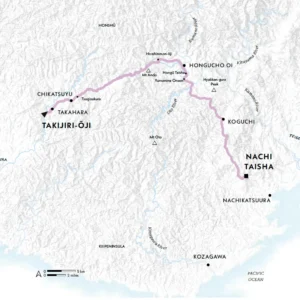
Start Takijiri-ōji
Finish Taisha
Distance 66km (41 miles)
Duration Four to five days
Challenge Level 3/5
When to Walk March-May & September-November
Info tb-kumano.jp
Follow in the footsteps of countless Shinto and Buddhist pilgrims on an ancient trail through the forest-cloaked mountains of the Kii Peninsula.
Even emperors enjoy a good hike. OK, we’re massaging the facts a little – but the point remains that over 1100 years ago it was Japanese Emperor Uda who travelled to the Buddhist shrines of Kumano on the mountainous Kii Peninsula, setting a trend that saw dozens more imperial pilgrimages here over the following four centuries. The region was sacred to Shinto before Buddhism took hold in Japan: yamabushi (ascetics) have trekked here from Yoshino since at least the late 7th century, and Kumano is believed to have had religious significance stretching back into prehistory, when it was thought to be inhabited by many deities.
Today, the objectives of the many who still tramp the Kumano Kodō – ‘Old Roads to Kumano’ – remain the three grand Kumano Sanzan shrines: Kumano Hayatama Taisha, Kumano Nachi Taisha and Kumano Hongū Taisha, that last devoted to Izanagi-Okami, a goddess said to have created Japan.
Rather like the Camino de Santiago in Spain, and also UNESCO World Heritage–listed, the Kumano Kodō isn’t one route but several paths. Five interconnected pilgrimage trails evolved over the centuries after Uda’s visit, spidering out from (or, rather, up to and connecting) the three shrines, and largely revived since the 1990s. Fewer emperors and aristocrats make the trek today, but many other hikers are following in those imperial footsteps. Some come to explore spiritual beliefs, but most simply walk to experience the glorious landscapes and traditional customs, to bathe in onsen (natural hot springs) and sample local cuisine – specialities include shishi-nabe (wild boar hotpot), river fish and mehari sushi (rice in takana, pickled mustard leaves).
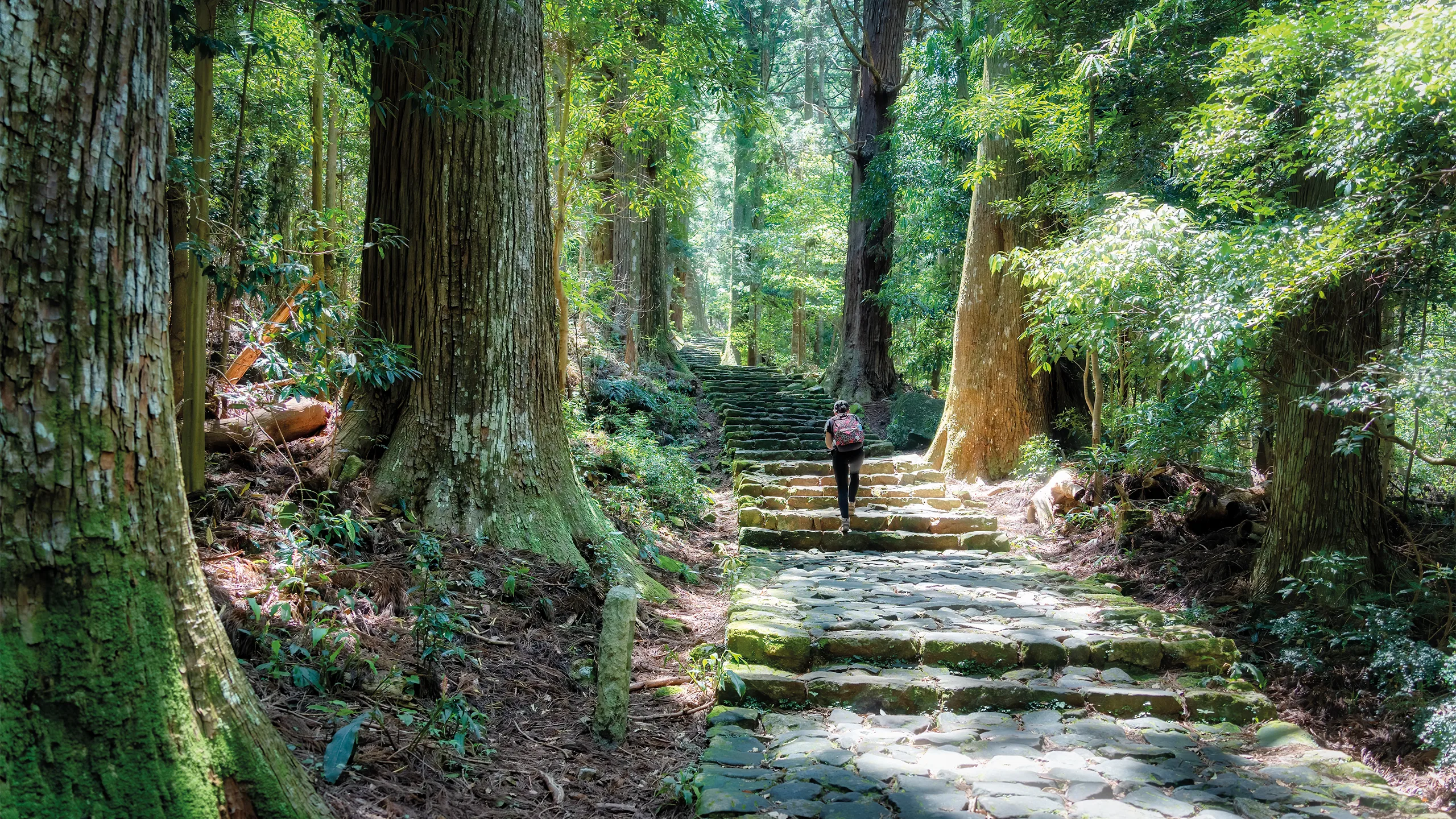
Most popular of the trails is the Nakahechi, known as the Imperial Route. With its start a short bus ride from Kii-Tanabe Train Station, and its end even closer to Shingu’s station, it’s accessible, attractive and achievable for hikers with a moderate level of fitness and experience. Clearly waymarked and made up of mostly well-maintained paths (with plenty of steps), this stretch is open year-round – though both hot, humid, rainy summer and chilly winter are less than perfect times to trek. Autumn’s ideal.
From the trailhead at the shrine of Takijiri-ōji, the path first climbs to Takahara village and continues to Chikatsuyu, home to the Kumanokodo Nakahechi Museum of Art. Beyond, tree-lined steps lead up to the Tsugizakura-ōji; nearby inns and guesthouses make this a convenient overnight stop. The following day switchbacks through wooded hills, sometimes emerging into fields or tea plantations, passing beneath wooden torii (gates) and visiting the prestigious Hosshinmon-ōji before reaching Kumano Hongū Taisha shrine in the valley. Many pilgrims stay at nearby Yunomine Onsen (hot-spring village) for a soothing soak.
Prepare for another testing climb the following day through cedar and cypress forest to Hyakken-gura Peak, offering amazing mountain vistas; then, it’s a long descent to the village of Koguchi on the Akagi River.
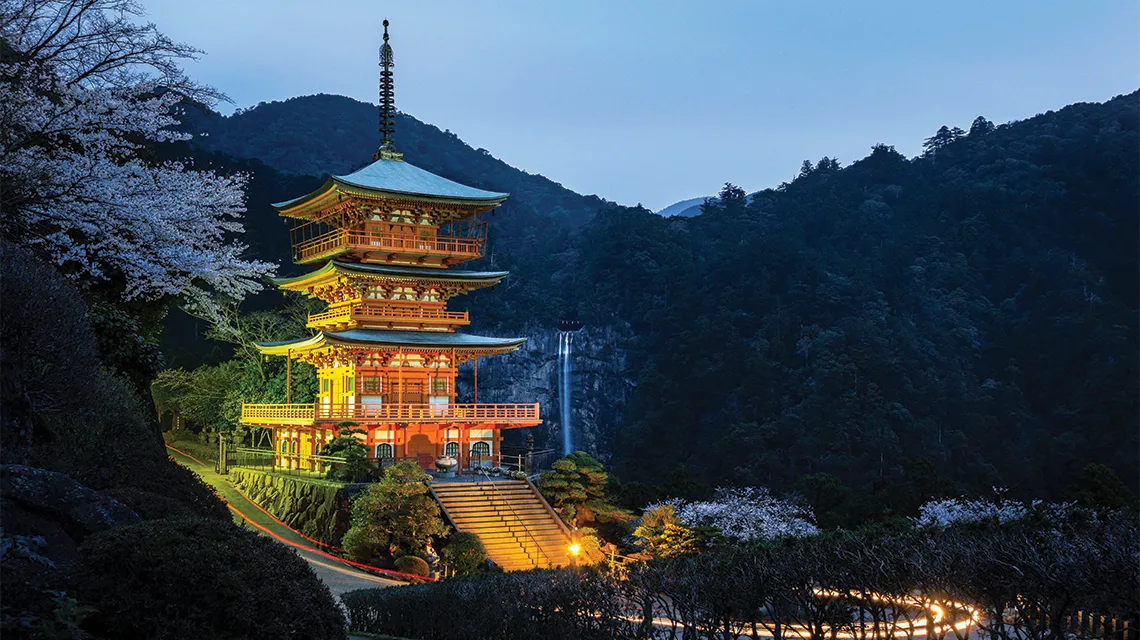
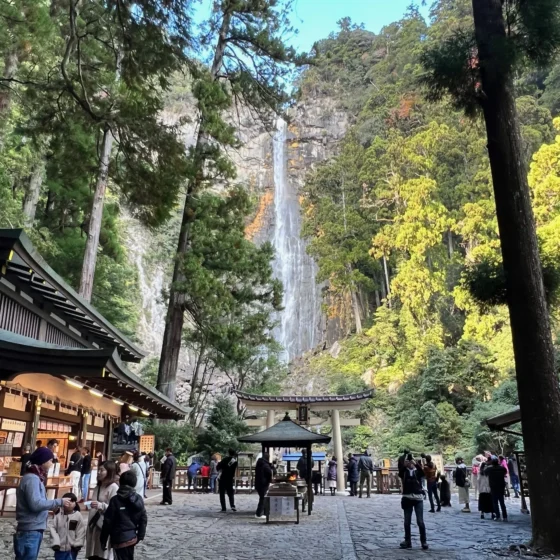
The final day’s route rises and then drops to the Kumano Nachi Taisha shrine, picturesquely perched before 133m-high (436ft) Nachi, Japan’s tallest single-drop waterfall – its clear cascades a suitably cleansing end to a purifying pilgrimage.

Get involved
Extract taken from Lonely Planet’s Where To Go When Hiking, written by Sarah Baxter and Paul Bloomfield. Discover 96 spectacular hiking trails around the world and the best times to explore them in this inspiring month-by-month trip planner.