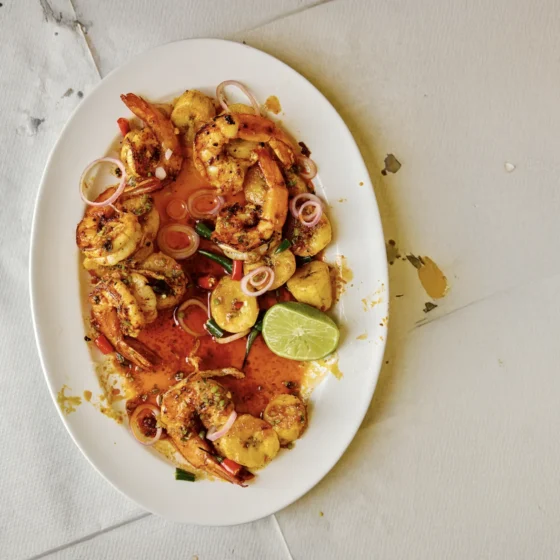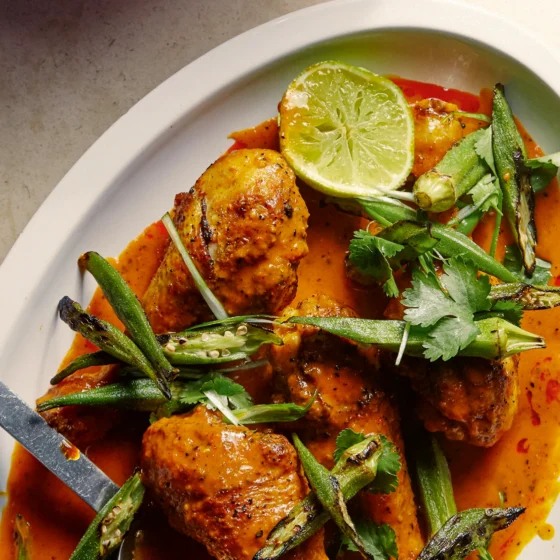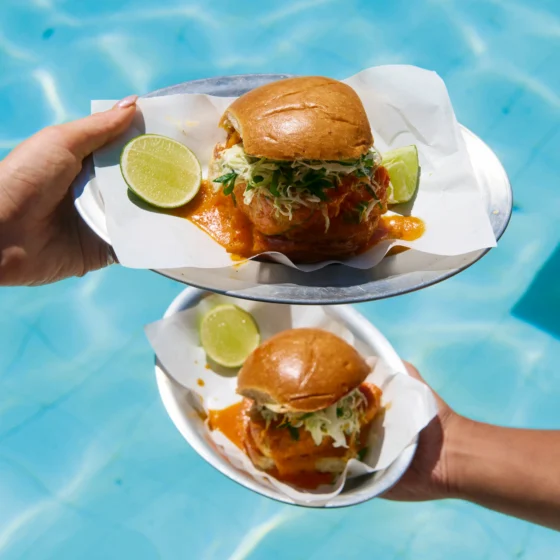










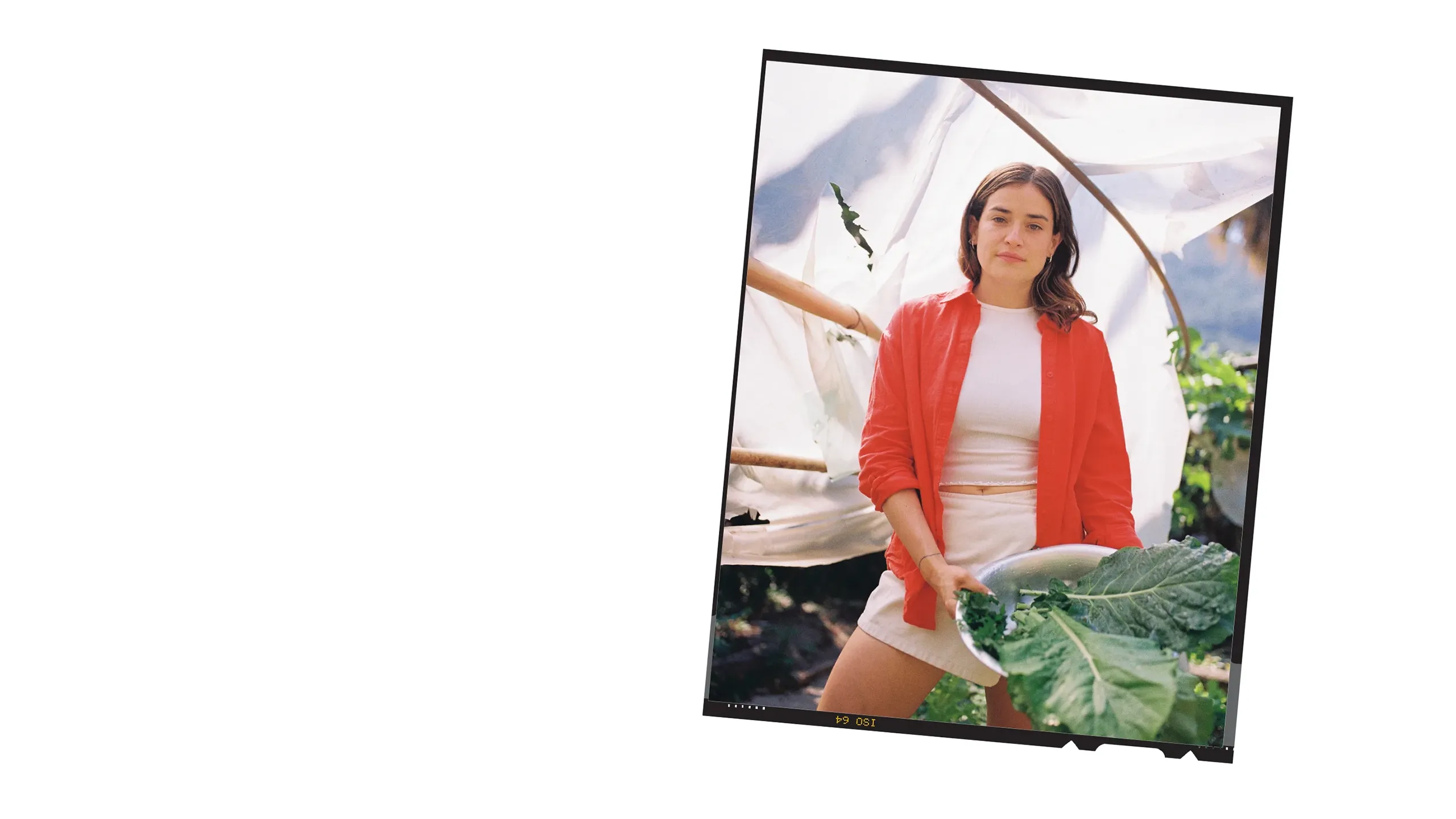
Raised on Italian pasta, Brazilian heat and Mexican fire, Ixta Belfrage learned to break the rules and trust her instincts in the kitchen at a young age, discovering that food is more than fuel

It’s medicine, connection and joy, seasoned with fearless creativity and a splash of rebellion. Ixta shares her cross-border ingredient policy, how she blends sustainability with city life, and why, at the end of the day, it’s all about balance.
What did food mean in your family growing up?
For my family, food has always been about healing. My mum suffered with a lot of health problems – she tried everything and no one really had any answers. It was only after she found functional medicine and nutrition that she was able to heal herself. She’s now been a functional medicine practitioner and nutritionist for 25 years.
So I grew up in a very health conscious household, which I hated because I was obsessed with food! Growing up in Italy, I was exposed to a lot of good food. And at home, the food we ate was very, very healthy and I wasn’t allowed to have a lot of things. We didn’t even really have bread at home.
But in the last few years I’ve really come back to food as a tool for wellbeing. I follow an 80/20 lifestyle – most of the time when I’m cooking for myself I’m very healthy. And then I’ll go out for a meal and be super excited to have whatever I want. People think I’m restrictive or boring, but for me, it’s so much more exciting to have these things every now and then. For example, I don’t eat gluten at home, so to go to a restaurant and have a bit of bread is a little treat.
When did you start cooking?
As far as I can remember, I’ve always cooked. We moved to Italy when I was three, so I was exposed to really good food at a young age. My best friend’s family had a restaurant – her uncle was a cook, her grandfather was a cook. So that’s how I first got the spark. And the only way my mum would let me eat the things I wanted to eat at home was if I made them myself!
How did that melting pot of cultural influences play out in your approach to cooking?
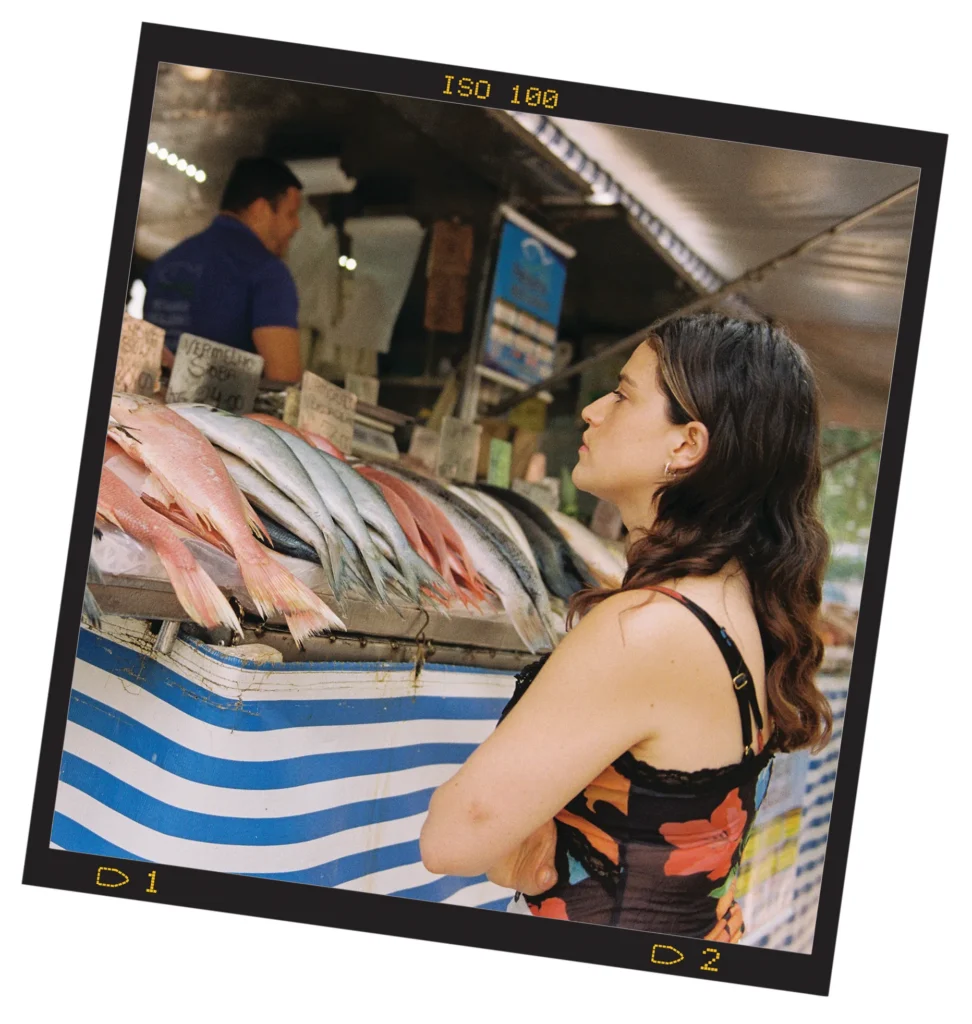
I’m half Brazilian, half English, grew up in Italy and spent a lot of time in Mexico, where my granddad lived for 35 years. I grew up with Brazilian ingredients, Mexican ingredients and Italian ingredients in our kitchen at home. So for me, mixing ingredients from different cuisines has always felt normal.
I quite like the word ‘fusion’ and there’s not really any other word for it. Obviously, one should absolutely respect where ingredients have come from. But ingredients don’t respect borders –tomatoes in Italy were brought in from Central America three or four hundred years ago. This idea that you can use a certain ingredient in this cuisine and not that one is a bit bonkers to me, because ingredients don’t know they’re crossing borders. For me, cooking is really an instinctual thing, and it’s about flavour. If ingredients work together, then I use them together.
“For me, cooking is really an instinctual thing, and it’s about flavour.”

Does food play a role in connecting us across cultures and generations?
For sure. The book I’ve just written is about reconnecting with my Brazilian heritage. I did a genealogy test that showed that my Brazilian half was a mix of indigenous, African and Portuguese, and I find that one of the best talking points is connecting over what ingredients you use in your culture and what ingredients are unique to your family, because every household will have a certain ingredient that they use because of where their grandma’s from or something like that.
Do you think we’re losing touch with this in today’s convenience culture?
I think we’ve come across the other side, and people are becoming more and more interested in cooking again. Food is one of the most exciting parts of the day for most people, the thing they look forward to and the thing they can come together with other people over. I think people have remembered the value in that. There is a time and a place for convenience food, but I think people are becoming more aware of the fact that ready-made food was created to make money, and to make people addicted. It was never about nourishing people. That is all coming out, which helps with that push to go back to cooking and using real ingredients.
How did you go from cooking at home to working in the Ottolenghi Test Kitchen?
It was a very, very long journey. I’ve always loved cooking but I didn’t particularly like the idea of working in a restaurant and I definitely didn’t want to go to culinary school. I started a painting degree, quit that and moved to Australia, worked in random jobs, went back to uni and tried design… and I just hated it so much, I was not in a very good place. One day, my sister was like, “Why aren’t you cooking? That’s what you love.” And it was a lightbulb moment. It seems really obvious, but it wasn’t.
So I had a little market stall, I had a little catering company, and then I worked in one of Yotam Ottolenghi’s restaurants as a bottom-rung chef. And honestly, I was doing pretty badly there, because instinctive cooking is not what you need to work in a restaurant. It’s much more about following orders – it’s not cooking, really. No one really taught me to cook, it was always very instinctive. So there are plenty of things I don’t know how to do. For me, cooking is more of a creative, instinctive thing. Anyway, I did that and got offered a job in the Test Kitchen.
“My favourite way to cook is just throwing things together, not timing anything, not weighing anything.”
What has food taught you?
I really don’t like following recipes, but I appreciate that other people do, and it is really fun to get people excited about different ingredient combinations. Recipe development has definitely taught me patience, because my favourite way to cook is just throwing things together, not timing anything, not weighing anything. It takes so much longer to recreate that for a recipe. Sometimes I have to test and retest up to 15 times to get it to exactly how I imagine it could be.
What are your key values around food, cooking and sustainability?
Balance is my number one value. I do cook with a lot of tropical fruits, coconut, red palm oil and ingredients from my culture that are not grown locally to me. And I am very interested in the whole world getting back to a more sustainable way of growing, so I have been trying to balance that. I get all my meat and veg from Riverford, because I really believe in their practices, not just around sustainability but how they operate their business. I wouldn’t call myself an activist or a role model. In the future I would love to have some land where I can grow and do that kind of thing. But living in a city, it’s a bit harder.
How do you balance city living with sustainable food practices?
The way I shop is the same as the way I eat, so 80% is a certain way and then 20% of the time I’ll indulge, for want of a better word, and buy a pineapple or a mango or a bunch of Mexican chilies. Before Riverford, I got most of my veg from Growing Communities, which is a local cooperative with farms in Essex, Dagenham and even Hackney. You never knew what you were going to get and I really enjoyed that. I loved not knowing and only cooking with seasonal ingredients.
If you could pick one dish for everyone to try, what would it be?
There’s a recipe in my new book inspired by one of my favourite Brazilian indigenous ingredients, a delicious, sour liquid called tucupi. It’s made by boiling and fermenting toxic wild manioc, so it’s impossible to come by out of the Amazon. I’ve created a duck stew inspired by this tucupi liquid, with yellow tomatoes, lime and ginger – I just love it.
Get involved
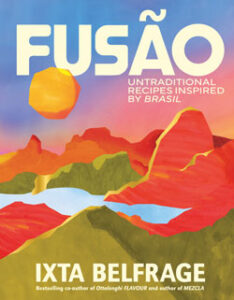
Ixta’s latest book, FUSÃO: Untraditional recipes inspired by Brasil, is out now. Follow her on Instagram