







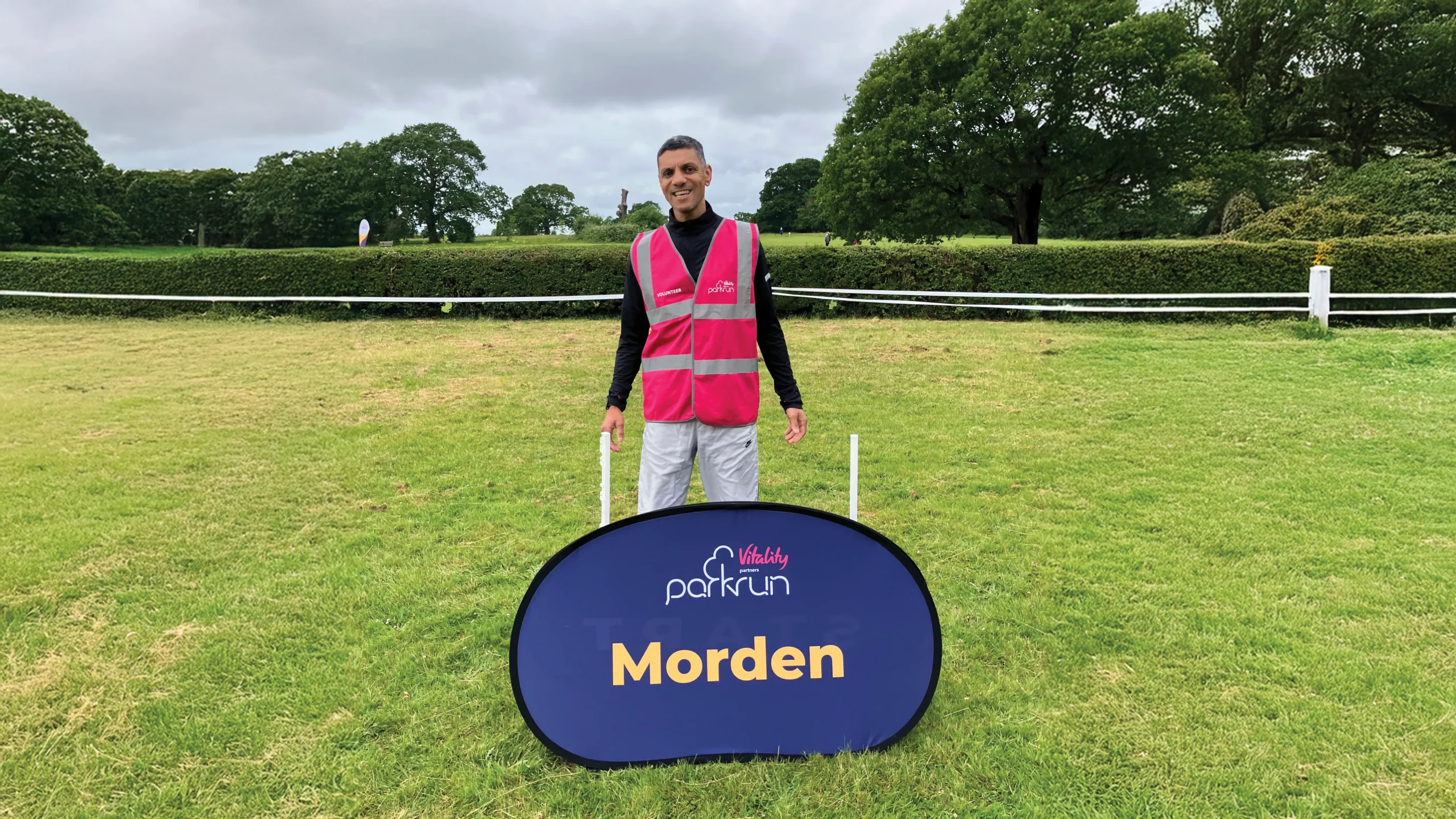
As an event support ambassador, he’s helped new events launch, mentored countless volunteers, and seen firsthand the life-changing impact of giving an hour on a Saturday or Sunday morning. For most people, parkrun starts with lacing up your trainers and heading to the local park for a 5k run, jog or walk. But behind every finish funnel, every scanned barcode and every round of applause at the run briefing is a small army of volunteers who make it all happen. Without them, parkrun simply wouldn’t exist. Jas Dhalley knows this better than most. Having first turned up at parkrun 13 years ago, he quickly discovered that volunteering was where his passion truly blossomed. Since then, he has worn almost every high-viz vest going – from marshalling to run directing – and now supports the launch of new events as a parkrun ambassador. For Jas, volunteering isn’t just about giving back; it’s about building communities, sharing joy, and seeing people of all ages and backgrounds find confidence, friendship, and wellbeing through parkrun.
Here, Jas shares his experiences of volunteering – what it takes to run an event, why it matters, and how you can get involved.
What does your role as a parkrun ambassador involve?
I support new parkrun proposals from the very start – working with the proposer, checking courses, liaising with councils and community groups, and helping secure funding. My role is to mentor new event teams so they can confidently run their own parkrun while knowing I’m there in the background if they need me.
How many volunteers does a typical parkrun need?
It depends on the size of the event, but the key is always safety. Core roles include a run director to oversee the event, volunteer co-ordinator to manage rosters, marshals to guide and cheer people on, timekeepers, finish token handers, and barcode scanners.
What training or support do volunteers get?
There’s always guidance and shadowing opportunities. Run directors and ambassadors like me make sure people know exactly what to do. It’s about building confidence and teamwork – volunteers learn quickly, and the sense of ownership and pride soon follows.
It didn’t take me long to realise the joy of volunteering. My first role was as barcode scanner, I remember it well
Do you need to commit every week?
Not at all. Volunteers can dip in and out depending on their availability. Most roles only take about an hour. The only thing we ask is that if you’ve signed up, you turn up – or let the team know if you can’t.
What does a typical parkrun morning look like?
It starts with course checks and setting up the finish funnel. Volunteers are briefed on their roles, there’s a welcome for first-timers, and then the run director does the main briefing. Once the parkrun starts, everyone is in position – cheering, timing, scanning, or handing out tokens. Afterwards, we pack down and head to the café to sort tokens and share a coffee together.
Who volunteers – and what do they get out of it?
All sorts of people: children, retirees, first-timers, long-timers. The common thread is joy. Volunteering gives people purpose, reduces stress, and builds friendships. Many come back again and again, often bringing family members with them.
How can someone get started as a volunteer?
Simply register for a free parkrun barcode on the website, check your local event’s roster, and email the team with the role you’d like to try. You’ll get a warm welcome, guidance on the day, and lots of encouragement.
Do you have a favourite inspiring story?
I’m always inspired by children who start at junior parkrun and grow into confident athletes, sometimes even competing at national level. At my local parkrun in Tooting, there’s also an elderly couple in their 80s who walk every week, rain or shine, encouraging everyone along the way. They say it keeps them feeling young – and they’ve become local legends.
Fancy joining Jas and thousands of others in making parkrun happen each week? Find out how to volunteer at parkrun