








You train for strength, endurance and speed – but how’s your mental game? Former rugby star Ed Jackson knows a thing or two about resilience – after being told he may never walk again, he set his sights high – and reached the summit of Snowdon, Wales’s highest mountain, just one year later. We find out how he did it, and why mental resilience could be your biggest flex.
How would you define mental resilience?
To me, mental resilience is about staying present. When everything feels overwhelming and the future seems uncertain, I’ve found that focusing on the moment and thinking what I can do right now, is what gets me through. It’s not about pretending things aren’t hard, but about putting one foot in front of the other, even when it feels impossible.
What’s the most important mental skill you developed during your recovery?
The most valuable skill I learned was how to break things down. When I couldn’t move anything but my shoulders, I stopped thinking about walking again and focused on the tiniest goals, like trying to wiggle a toe. Celebrating those small wins kept me motivated and built a sense of momentum.
What would you say to someone who’s just suffered a major injury or setback and feels like giving up?
I’d say: don’t carry it all alone. Speak to someone, whether it’s a friend, a stranger, or a professional. I tried to put on a brave face at first, but opening up, being vulnerable, was the turning point for me. You don’t have to know the way forward. Just don’t suffer in silence.
How did you rebuild confidence in your body after such a traumatic experience?
Step by step.. quite literally! The first time I moved a toe, it felt like I’d just scored the winning try. I allowed myself to acknowledge and celebrate every small improvement. Each time I hit a milestone, it reminded me that my body could do more than I thought, and that built my confidence over time.
What role did small, achievable goals play in the recovery process?
They were everything. The bigger picture, walking again, was too overwhelming early on. So I zoomed in and set goals like “move my foot 1 cm” or “sit up for 30 seconds.” Those micro-goals gave me purpose every day. Over time, they added up in ways I never expected.
How do you prepare mentally for physical challenges now, knowing what your body and mind are capable of overcoming?
I start with mindset. I’ve learned that if I go into something with a clear, focused mind, knowing why I’m doing it and what I want to get out of it, my body follows. I don’t obsess over the outcome. I prepare by visualising progress, staying grounded in the process.
I don’t think about the top of the mountain – I focus on the next step, the next breath.
What’s your go-to mental strategy when you feel overwhelmed or want to quit during a workout or challenge?
I zoom in. I don’t think about the top of the mountain or the end of the workout, I just focus on the next step, the next rep, the next breath. And I allow myself to acknowledge when things are tough. Sometimes, giving myself space to feel overwhelmed helps me move through it faster.
How do you handle those moments when your brain tries to protect you by making you want to quit or play it safe?
I’ve learned to question those thoughts. Is this fear talking, or is it real danger? Most of the time, it’s just my brain trying to keep me comfortable. I remind myself of everything I’ve come through. And sometimes I borrow strength from others, whether it be friends, memories, or the people who supported me through recovery.
Can you give us an example of a mental technique or strategy that got you through a particularly tough day?
I revert back to my tool belt of actions that I know make me feel better…. Going for a walk, working out or spending time talking with a friend usually helps to change the course of the day. Mood follows actions so you have to act first.
Is resilience an inside job, or is social support important?
It’s both. The inner work – staying present, setting small goals.. that’s what kept me moving forward. But I would never have made it without the people around me. My family, my mates, my wife. Just having them turn up, make me laugh, or sit with me changed everything. Community is a huge part of resilience.
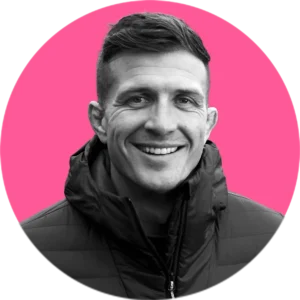
Ed Jackson
Ed is an adventurer, charity founder, broadcaster, speaker, author, brand ambassador and mentor. His latest book, From the Mountain’s Edge, is out now, and his documentary, The Mountain Within Me, is available on Amazon Prime. Follow Ed on Instagram @edjackson8.