






When you’re injured, the hardest part can be knowing you have to stop doing the thing you love. The temptation to test it, try “just one” session or get back before you’re ready can be almost as frustrating as the injury itself. But sometimes the best way back is to step away, rebuild and find other ways to keep moving.
Britain’s most successful competitive climber, Shauna Coxsey knows that feeling well. During a career that saw her win two successive World Cups, two World Championship medals and compete at the Tokyo Olympics, she battled her fair share of injuries.
In 2017, an 80 percent tear of the A2 pulley tendon in her finger kept her away from the wall for almost 14 weeks. Because tendon recovery is slower than muscle recovery, rest and rehabilitation are critical. After 8 weeks of R&R, Shauna was able to practise 10-second hangs on wide ledges. “I’ve done lots of rehab and spent lots of time resting my finger, suppressing the overwhelming urge to climb,” she explained. “The rehab and exercises are easy, you’ve just got to put the time and effort in.”
“Climbers place an unusual amount of tension through their fingers, and are required to hang in complex positions, bearing their full body weight,” explains elite sports physio Alison Rose <internal link>.
The injury you can’t plan for
Another occupational hazard? Knee issues. “It’s common to pick up finger injuries and shoulder niggles, but my knees were my most persistent issue in the lead-up to the Olympics,” Shauna recalls. “A few days before the competition day, I got a sharp pain on the outside of my knee. A new pain. A pain I’ve never felt before.”
A scan revealed a torn meniscus (the cartilage that acts as a ‘shock absorber’ between the thigh and shin bones). Shauna was devastated, but decided to push through, narrowly missing out on qualifying for the final. “There was more going on than we originally thought,” she explained. “A few tears in the cartilage and a significant amount of bone bruising. There wasn’t much to be done other than rest. Luckily, it was agreed I could climb with a brace.”
While being strong, flexible and well-conditioned can help, traumatic and twisting-related knee injuries can’t usually be prevented, as they are often accidental, Alison comments.
Beyond the wall
Despite retiring after the Tokyo Games, Shauna still works with a physio and strength and conditioning coach to help her stay strong and prevent re-injury. “I’ve moved into rock climbing,” she explains. “I love the freedom it gives me. With competition climbing, I had to perform at that time, on that day, in that moment. Rock climbing has reopened my whole world of climbing.”
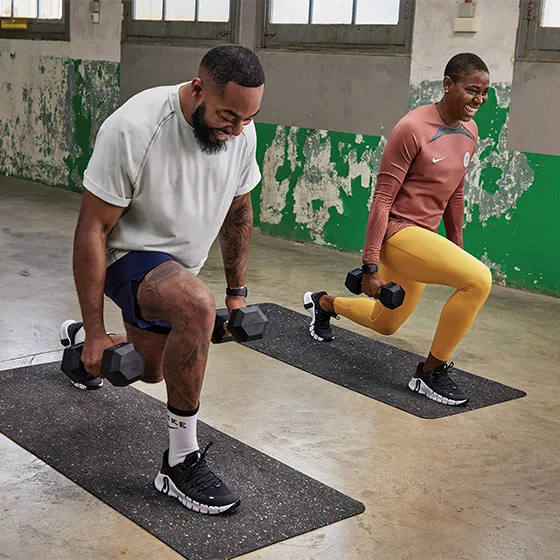
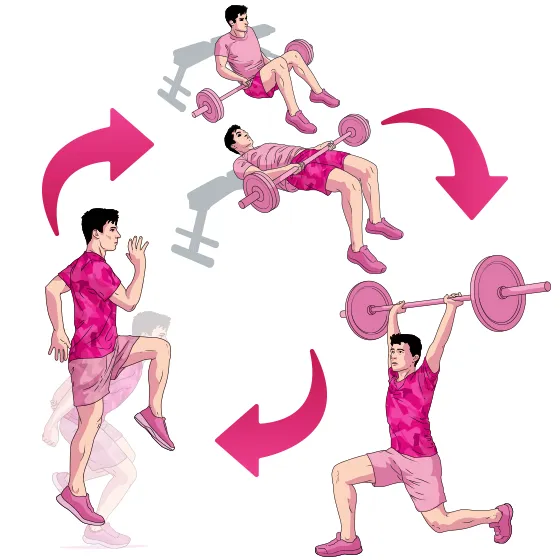
Shauna keeps herself strong with four “bare-minimum” training sessions per week: two finger-strength sessions, one board session and a four-hour climbing session, on the wall or outdoors. “I try to get to the gym once a week,” she adds. “I use the leg press machine and do lunges and Romanian deadlifts. Upper-body wise, I’m still doing lots of TRX work, dumbbell shoulder work and pull-ups for stability. If I feel strong, I feel good on the wall.”
Come back better
Shauna’s top five tips for dealing with injuries
01 Rest “It’s holding back that’s the hardest bit,” says Shauna. “Not just diving straight back in and making it worse again.” But taking the time to rest and rebuild slowly is crucial.
02 Think positive “I choose to have a positive outlook on things, and I think anyone can do that if they put enough effort and practice in,” says Shauna. “It’s a conscious choice.” Focus on what you can do to move forward.
03 Refocus “Your attention has to shift from what you were doing to what you can still be doing,” Shauna explains. If you have a finger injury, you can work on your legs. If you have a knee injury, you can work on your upper body.
04 Find a distraction “I’ll always find something to occupy my mind and my time,” says Shauna. She pours any excess time and energy into baking, walking and charity work.
05 Learn from it “Every injury I’ve had, I’ve come back stronger as I choose to have that outlook and think about what else I can work on,” Shauna explains. Once you’re training again, keep doing the things that make you stronger, even if you don’t enjoy them. “And warm up – it’s so important!”

Shauna Coxsey
Shauna is Britain’s most successful competitive climber and the UK’s first-ever Bouldering World Champion. Connect with her on Social