









 For decades, vegetables have played a supporting role – a worthy but often uninspiring side to the ‘main‘ event. But as interest in plant-based eating grows, there’s a renewed appetite for meals that put vegetables front and centre, not just for ethical or environmental reasons, but for flavour, satisfaction and long-term health. Around the world, traditional cuisines have long celebrated vegetables, pulses and grains as the foundation of deeply nourishing, culturally rich meals. These dishes remind us that plant-based eating doesn’t have to be restrictive, complicated or reliant on ultra-processed substitutes – it can be vibrant, comforting and deeply satisfying.
Emily Angus, dietitian at The Vegan Society, shares why veg deserves more love, how to build balanced plant-based meals, and why embracing variety, flavour and tradition may be the key to eating well – and enjoying it too.
Are we seeing a renewed interest in veg?
I hope so, as vegetables are so important for our long-term health and nutritional well-being. Data does suggest that people in the UK are eating more vegetables than we were five years ago, but most people in the UK still don’t meet the recommended 5-a-day intake for fruit and vegetables, with average intake sitting at just 3-a-day for all age groups.
Realistically we still have some way to go with reigniting interest in fruit and vegetables. Achieving this requires a variety of approaches, which could include improving nutritional knowledge and supporting people to improve their confidence in cooking as well as addressing social and financial barriers to eating enough vegetables. We know that people in the most financially deprived areas of the UK are less likely to consume their 5-a-day, so addressing the rising price of food in the current cost-of-living crisis is crucial.
Do traditional plant-based dishes tend to be more nutritionally balanced?
Traditional plant-based dishes often include foods such as grains, beans and pulses, vegetables, fruit and nuts. They provide multiple macro- and micronutrients including high-quality protein, carbohydrates, fats, fibre, vitamins and minerals. Some examples include chana masala or daal with rice, Jamaican rice and peas, Ital stew, vegetable and tofu ramen, and Ethiopian platters containing foods such as misir wot, atir kik and tikil gomen served on injera bread.
Having said this, it’s worth noting that not every meal has to be perfectly balanced, as long as across the average day we are getting enough quantity and variety of food to meet our nutritional needs.
Which global cuisines have the richest traditions of naturally plant-based cooking?
For centuries, people all over the world have been eating plant-based food for a variety of reasons, including animal rights, but also tradition and culture, local food availability, spiritual codes of belief and religious reasons. Many traditional Caribbean, Ethiopian, Indian, Indonesian, Japanese, Indigenous Mexican, Vietnamese and Middle Eastern ways of eating, to name some examples, are based in a rich tradition of plant-based cooking.
Whilst each of these global cuisines is based on different core ingredients, boasting their own unique flavour profile and cooking techniques, they do all tend to be based on locally grown, minimally processed plant foods. Eating this way is not just good for our personal health, but the health of the planet.
Additionally, naturally plant-based cuisines show us that vegetables, beans, lentils and other plant-based foods don’t need to be relegated to the sidelines of a meal. By exploring different combinations of ingredients and ways of cooking, you can find new flavours, textures and combinations to create thoughtful meals where plants are truly the star of the show.
Add colour, texture and nutrient density to your veg plate
Why do you think vegetables are often relegated to side dish status in Western cuisine?
This is definitely true in the UK, where vegetables are often an afterthought, or even something to be endured alongside the ‘main’ part of a meal. I think it’s important to get people excited about cooking vegetables in ways that elevate and play with their flavours and textures.
I think that the ‘health’ status of vegetables leads people to avoid cooking them in ways that are more interesting and satisfying due to concerns this will somehow make them less healthy. In reality, adding some fat and flavour to your vegetables and preparing them in a way that makes you actually excited to eat them doesn’t take away from their nutritional benefits such as vitamin, mineral and fibre content. In fact, adding fat during the cooking process allows us to absorb even more nutrients, particularly the fat-soluble vitamins A, D, E and K.
For example, I like to chop and marinade my aubergines in a mixture of miso paste and sesame oil before roasting them in the oven until they reach that melt-in-the mouth texture. Served alongside some wholegrain rice and tofu, they form the most exciting part of a nutritionally balanced dish.
Has the focus on finding vegan substitutes for meat and cheese gone too far?
Vegan substitutes, particularly meat substitutes, are rather unfairly vilified in the media. Research shows that making the swap from animal-based products, such as beef burgers or sausages, to vegan substitutes can be beneficial for our health in many ways. New product development is also important, not just to provide us with more options when it comes to our diets, but also to help us create a more sustainable food system for the future.
Having said that, we know that more traditional vegan diets based mainly around whole and minimally processed plant foods have the strongest protective effect on our long-term health. Foods such as fruits, vegetables, beans, pulses, wholegrains, nuts and seeds provide particular benefits for reducing the risk of cancer, Type 2 diabetes and cardiovascular disease, and for healthy aging.
We’re lucky to live in a time where we can blend tradition and innovation when making dietary choices, so it’s not an either or decision. Cooking more traditional meals from scratch and experimenting with a variety of different naturally-occurring plant foods can help protect our health and allow us to explore a wider range of tastes, flavours and textures to find what we enjoy. It’s important to have fun with it!
Including vegan substitute foods in our diets in moderation can support us to meet specific micronutrient needs such as calcium and B12, facilitate people in reducing their intake of animal products by replacing them with foods that feel familiar, and allow people following a plant-based diet to join in more easily in certain social settings that involve food.
What are the most nutrient-dense vegetables we tend to overlook or underuse?
I think the issue is not necessarily that specific nutrient-dense vegetables are overlooked or underused, but that people tend to have a low variety of fruits and vegetables in their diets. There are over 20,000 known edible plants but most of us stick to our favourite few on rotation.
Each different vegetable provides us with a unique range of nutrients, so embracing variety allows us to get a fuller complement of vitamins and minerals such as Vitamin A, calcium, iron, Vitamin K and zinc. Variety is also great for our gut microbiome, with gut health specialists advising us to eat 30 different types of plants (which includes fruit, vegetables, legumes, grains, nuts and seeds, spices and herbs) weekly.
Start by trying something new each week. I’ve found that my regular vegetable subscription box has helped me to branch out and cook recipes I’ve never thought of before based on what arrives on the doorstep, as well as trying some completely new vegetables such as fennel!
There are over 20,000 known edible plants but most of us stick to our favourite few
What’s the simplest formula to building a satisfying, nutritionally balanced plant-based meal?
This is relatively simple once you get the hang of it! You want to focus on including all three macronutrients and a range of micronutrients. Your plate should include: Carbohydrates: for example rice, quinoa, potatoes, buckwheat, bread, pasta or noodles. Aim for wholegrain varieties where possible, as these contain extra fibre and B vitamins and help to keep us fuller for longer.
Protein: foods such as tofu, tempeh, beans and lentils provide a rich source of protein which supports muscle growth and repair and provides us with essential amino acids.
A source of fat: nuts and seeds, avocado and vegetable oils such as rapeseed or olive oil are all healthy sources of unsaturated fats.
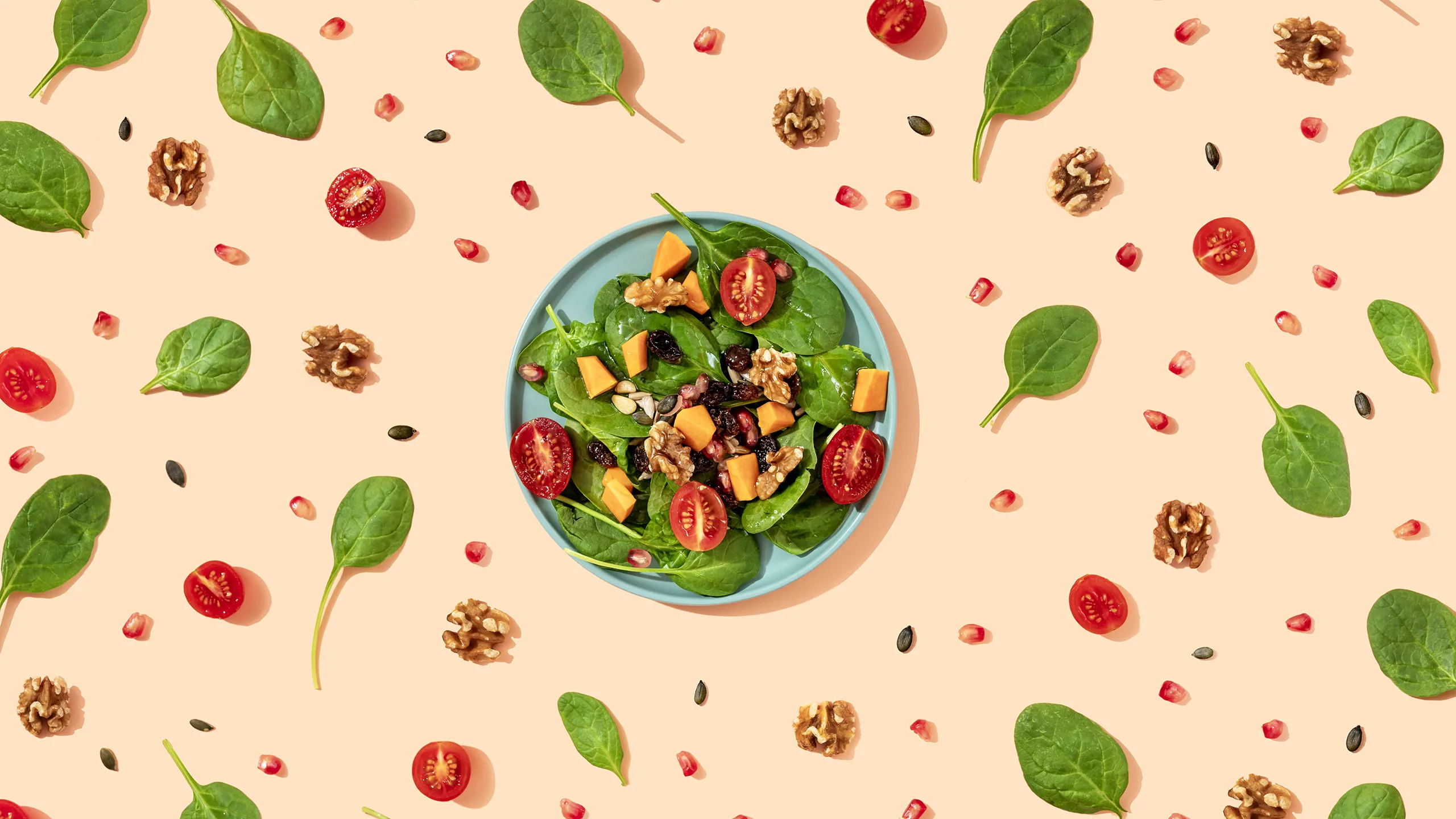
Fruit or vegetables: aim to include at least 2 portions per meal. Different colours of vegetables contain different nutrients, for example orange vegetables are an excellent source of Vitamin A, and leafy green vegetables of Vitamin K. Variety is key to meeting your needs across the week, so switch it up where you can. Vegetables that form the basis of sauces such as chopped tomatoes also count!
And finally, find the ‘satisfaction factor’ – experiment with combinations of foods and recipes that excite you and you most enjoy. As much as nutritional content, this is key for how satisfied a meal leaves us feeling.
For someone intimidated by the idea of ‘going vegan,’ how can we get started?
People have been putting together healthy, balanced plant-based meals for centuries. Whilst nutritional planning and knowledge is important, try not to overcomplicate it. You can find more information on planning a nutritionally balanced vegan diet in The Vegan Society’s nutrition resources and for recipe inspiration which includes plenty of traditional plant-based meals from around the world you can explore our recipe pages.
It’s also worth picking up a cookbook or two that showcases vegan dishes from different cuisines to expand your repertoire in the kitchen. My most recent purchase was ‘Vegan Africa’ by Marie Kacouchia which explores vegan dishes from 13 different African countries.
Finally, following creators on social media who focus on creating traditional vegan dishes, such as @theiranianvegan, @browngirlvegan_ and @vegannigerian is a great way to find new, delicious recipes.
Emily Angus is a dietician for The Vegan Society. She previously worked for the NHS.