








 hen the controversial and unprecedented decision was made to move Wimbledon FC to Milton Keynes in 2002, supporters formed a new team that would start afresh on the bottom rung of the English football pyramid. Within nine years AFC Wimbledon had risen to the Football League, before making an emotional return to Wimbledon’s former home of Plough Lane in 2020. Now playing in League One, the club is one of the best-run fan-owned clubs in world football. James Ledward of the Dons Trust Board reveals what’s behind their success.
The Dons Trust has more than 7,500 members and is run by an elected board of volunteers, roughly a third of which rotate every year. Like any membership organisation, we’re elected to represent the views of members. We run on manifestos of what we think needs to be improved, and then as a board we deliver on what we think are the members’ priorities. Three of our board members sit on the AFC Wimbledon club board, but we don’t get involved in the operational running of the club. Our role focuses on the strategic side of things, or where there are potential moral or ethical implications to a decision. For example, our members have voted in the past that we don’t accept sponsorship from gambling companies. That’s a Dons Trust directive that the club must follow.
We talk a lot about the ‘Wimbledon way’, and the club’s three principles are togetherness, resilience, and constant improvement. Forming a new football club required extreme togetherness and resilience. It took just nine years to go from newly formed to back in the Football League. That’s an absolutely insane way of demonstrating constant improvement. It’s those principles that got us reformed, that got us to Kingsmeadow, that got us back to Plough Lane. The decision in 2002 was bold, it was brave, it was brilliant. People thought it wouldn’t succeed. Well, nine years says otherwise.
Fan ownership is our biggest strength, because the club is run by the fans for the fans, but it can also be our biggest challenge, because we don’t have a majority owner who can fund the shortfalls. Our budget for 2025/26 was the lowest but one in League One, and even if you were to put us in League Two, we would have a bottom half budget. So we’re outperforming. It’s down to the fans who come week in, week out, win or lose, buy food at the stadium, buy drinks, merchandise, it all goes back into the club’s pot.
The misconception some members have is that we own the club and can just tell them what to do. It’s not that straightforward. The Dons Trust does have an effective veto, but it’s not a case of “we want you to do this, so do it, even if you think it’s a bad idea.” That’s just not how a constructive relationship can work. The biggest myth about fan ownership more broadly is that it can’t work in this environment. It can. We are proof it can, and we will always push to say it can.
We’re at an interesting time at the moment, because we’ve just had the vote to permit us to sell more equity if the right deal came along. The Dons Trust are in active conversations with potential investors and we’ve been open with the membership about that. For any deal to proceed, we have a high threshold that we have to pass, we have to hit 75% of members voting and 50% in favour. Furthermore, those in favour must represent at least 40% of the total membership. We achieved it in the vote to sell more equity, which shows we’ve got an amazing, engaged membership group.
But that was the easy bit. The hard bit now is to negotiate the right deal and present it to the fans. One of our board members always says that as a child he grew up watching Wimbledon FC in the Premier League, and he wants his kids to see the best AFC Wimbledon possible. Where views on certain things in our membership may vary, this is one opinion that all members have in common

James’ 5 tips for what makes a strong fan-led organisation
A clear sense of purpose
“The reason for the Dons Trust existing makes for something really special: it’s all down to the fans and the people who work hard behind the scenes.”
Togetherness in tough times
“We’ve had people travelling to Lincoln, Huddersfield, Wigan, even when in a bad run of form. We’re very lucky to have fans who are that dedicated.”
Honest communication
“We’re always very open and honest with our members. Keeping them engaged is a vital piece we’re always thinking about.”
Know your role
“With the dynamics, we do not get involved in the football side of things. We have a brilliant team of people whose job it is to do that.”
Community at its heart
“Along with our charity, the AFC Wimbledon Foundation, we’ve got the Dons Local Action Group distributing food parcels across south-west London and Wimbledon in Sporting History, who have a museum at AFC Wimbledon’s ground. That community outreach is one of the great things that we do.”
James Ledward and the Dons Trust
The Dons Trust is the supporter-owned organisation behind AFC Wimbledon, formed after fans reformed the club in 2002 following Wimbledon’s controversial relocation to Milton Keynes. Run by an elected board of volunteers, it represents over 7,500 members and influences the club’s strategic and ethical decisions. AFC Wimbledon reached the Football League within nine years and returned to Plough Lane in 2020. They currently play in League One. James Ledward is a member of the Dons Trust board.
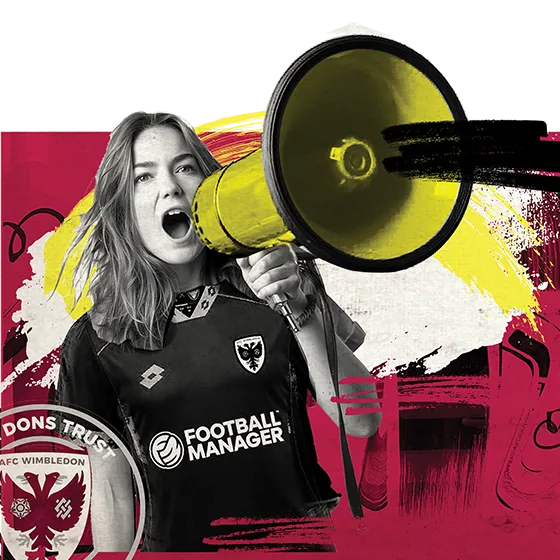
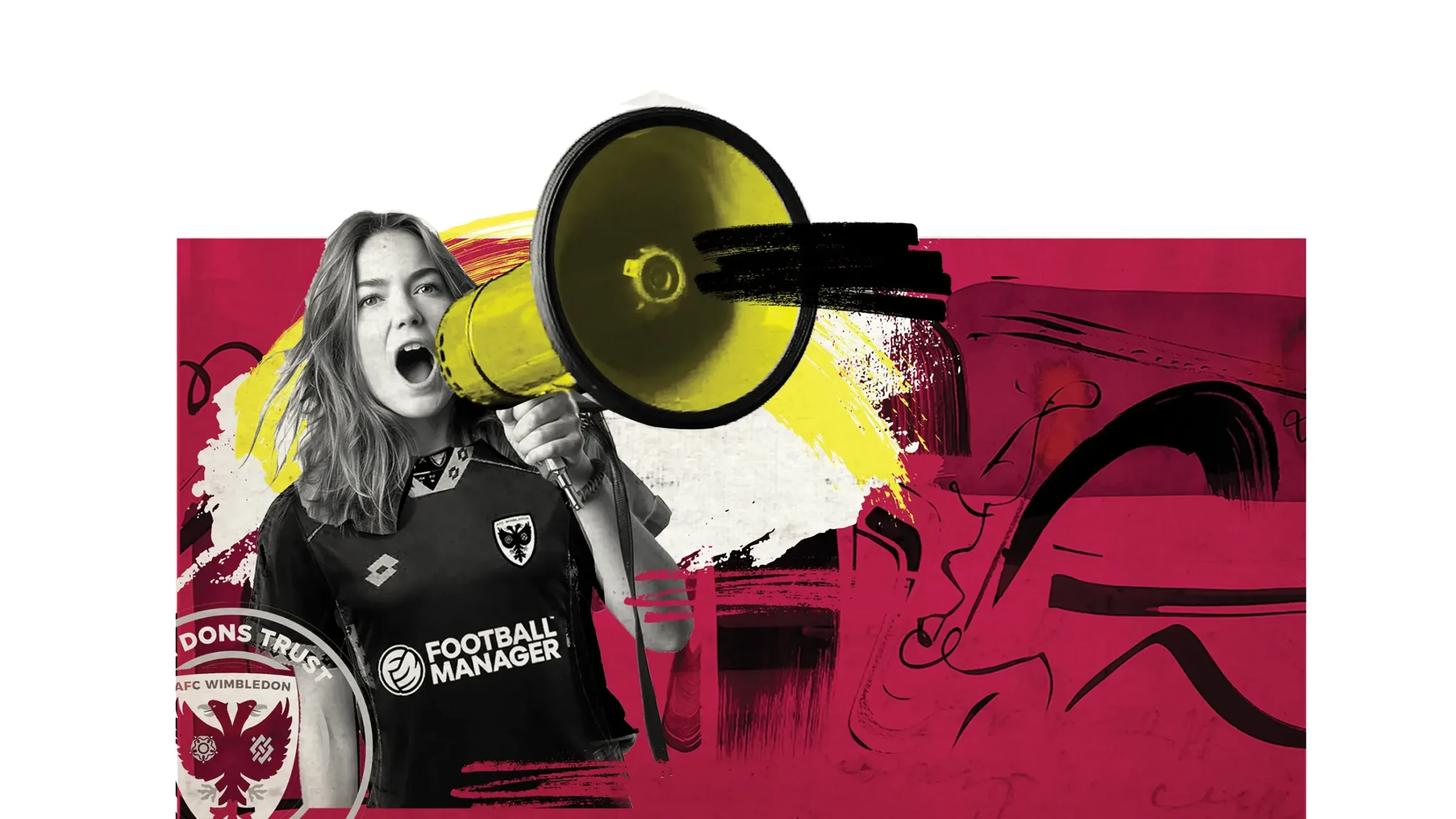
Collage by Bill McConkey