

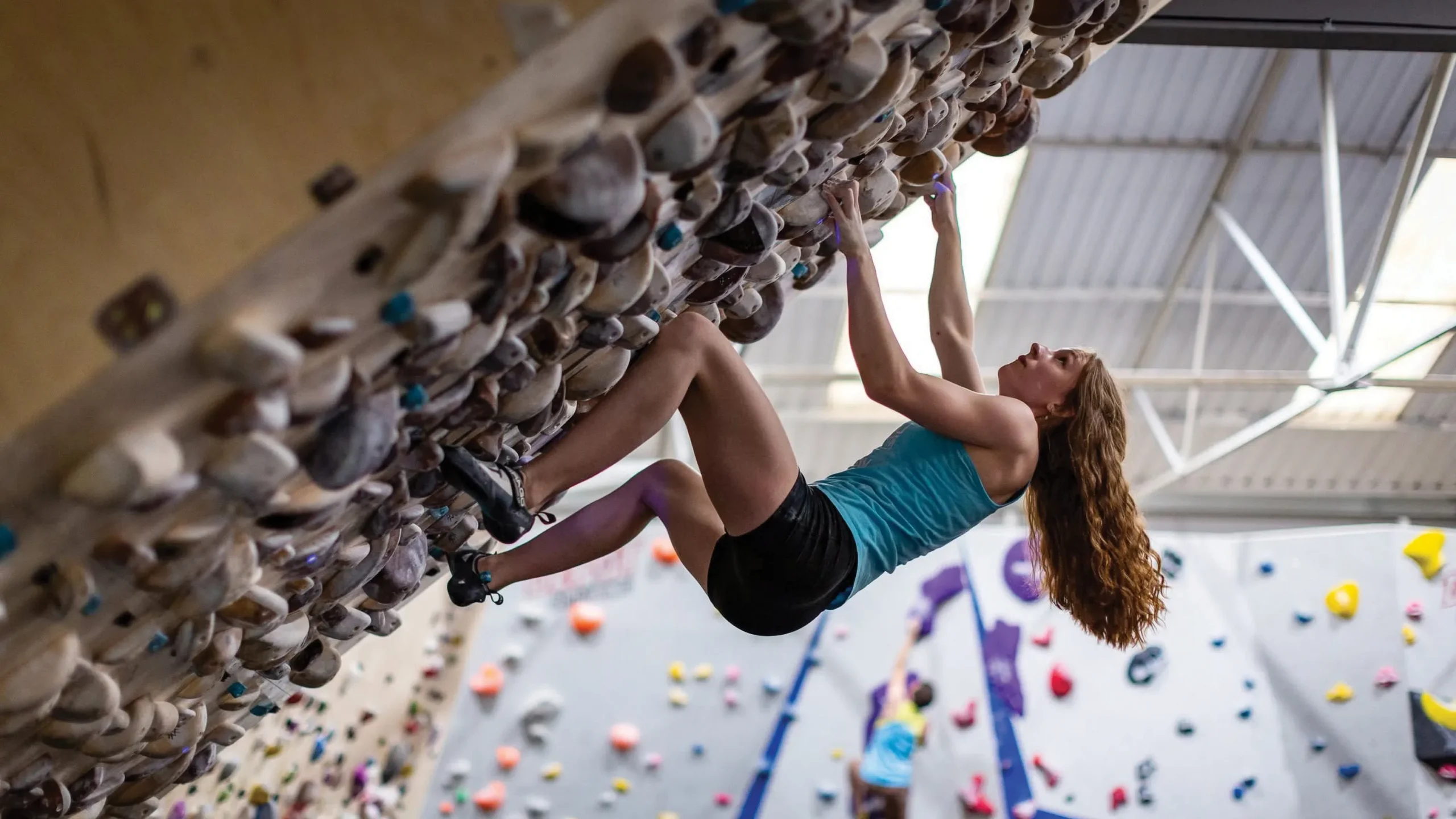
A rising star in the sport of bouldering, Emma Edwards reveals why technique beats strength, how she handles nerves and what keeps her motivated.British Bouldering Champion Emma Edwards first discovered climbing aged around 10, tackling the famous boulders of Fontainebleau before joining kids’ club Rope Race. “I’ve been hooked ever since,” she says.
Now competing at international level, Emma counts two World Cup finals, the 2024 European Youth Championship and a Senior European Cup victory in 2025 among her proudest achievements. Her success also challenges the assumption that climbing is all about physical power. “You need to be really strong to climb hard” is one of the sport’s biggest misconceptions, she says. “Most of the time it’s your technical ability holding you back, not your strength.”
Emma trains five times a week, combining climbing with gym work, finger training and stretching, but admits knowing when to back off can be difficult. “For me it’s knowing when to push through or when to rest.” Competition nerves remain part of the challenge, too. Emma embraces them rather than fighting them: “I remind myself that I’m nervous because it means a lot to me.”

Factfile
Age 21
Based Leeds
Started climbing aged 10
First club Rope Race
Away from climbing Baking, crosswords and spending time with friends
Socials Instagram
Views of climbing
What’s a common misconception about climbing?
That you need to be really strong to climb hard. Climbing is actually very technical and, most of the time, it’s your technique holding you back rather than your strength.
What are the biggest barriers to getting involved?
For a while, climbing gyms were seen as quite male-dominated, which could make them intimidating for women and girls. But climbing has grown hugely and the women’s gym scene is stronger than ever.
What’s the best thing about being part of a climbing club?
Training with other people. It’s really fun and probably one of the best ways to improve your own climbing.
Why would you recommend climbing?
It’s a great way to stay fit while having fun. It challenges your whole body and your mind because there’s so much problem-solving involved. There are also lots of different disciplines – bouldering, sport, speed and ice climbing – so there’s something for everyone.
Early years
How did you get into climbing?
I first tried outdoor bouldering in Fontainebleau, France, when I was about 10. A few months later, my dad took me to a kids’ club and I’ve been hooked ever since!
What was your first climbing club?
Rope Race.
What was your first big success?
Qualifying for the Youth Climbing Series national final when I was 12 or 13. You had to finish in the top three in your region over three rounds to qualify for the national final in Edinburgh. To my 12-year-old self, it felt like the pinnacle of competition climbing!
Hitting the heights
What are your proudest achievements?
Making two World Cup finals felt pretty amazing. Winning the European Youth Championships in 2024 and a Senior European Cup in 2025 also meant a lot to me.
Which sportsperson do you admire?
Janja Garnbret. She’s a two-time Olympic champion and probably the greatest female climber of all time. Her results are incredible, but what really inspires me is her competition mindset and raw passion for climbing.
Train game
What does a normal training week look like?
I usually train five times a week. That includes climbing on the wall as well as gym work, finger training and stretching.
Do your friends understand the commitment involved?
I’m lucky that my close friends understand how busy I am. It means that when we do get the chance to spend time together, we appreciate it even more.
What’s your favourite training session?
I love projecting – working out a difficult climb, sometimes over multiple sessions, and then trying to ascend it. The feeling of finally doing something that initially seemed impossible is like no other.
What’s the best advice your coach has given you?
Train with intention and be present.
Which part of your body suffers most?
Honestly, all of it!
What’s the toughest thing about being an athlete?
Knowing when to push through and when to rest. I’m still trying to find the right balance.
What’s the hardest skill to master?
Knowing when to rest!

The feeling of finally doing something that initially seemed impossible is like no other
Your motivation
How do you stay motivated?
There’s always something different to improve in climbing, so I find it quite easy to stay motivated. When I am struggling, I think about my younger self and get the training done for her.
Do you get nervous before competitions?
Yes. I remind myself that I’m nervous because it means a lot to me, and I’m grateful to have something I care about that much. I’ve been nervous before and still performed well, so I know I can do it again.
How do you deal with setbacks?
I try to use them as learning experiences. Sometimes failing is the best training we can do.
Eating smart
What are your favourite training foods?
I really enjoy Kellogg’s Squares bars during training because they’re a good source of carbohydrates and help keep me fuelled.
What’s your go-to treat?
Anything chocolate!
Favourite recipe?
A really good chocolate cake. Baking is one of my favourite ways to switch off.
Fun stuff
Tell us three things people might not know about you
I’m half Italian, I used to play in a brass band and I lived in California for a couple of years when I was younger.
Are there any sports you’re not good at?
Anything cardio-related – I find it pretty hard!
How do you relax and recover?
I like baking, doing crosswords and hanging out with my friends