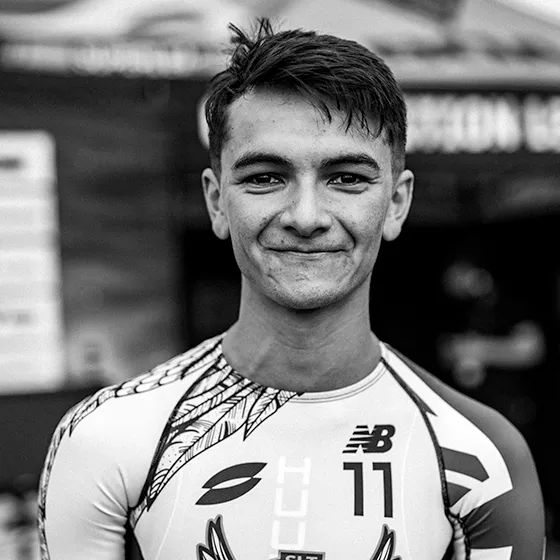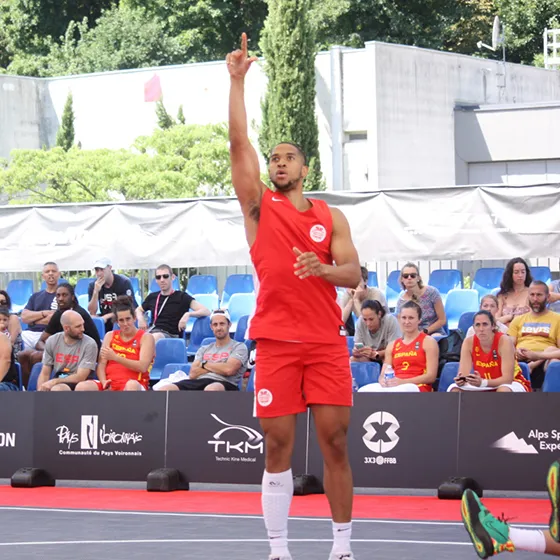










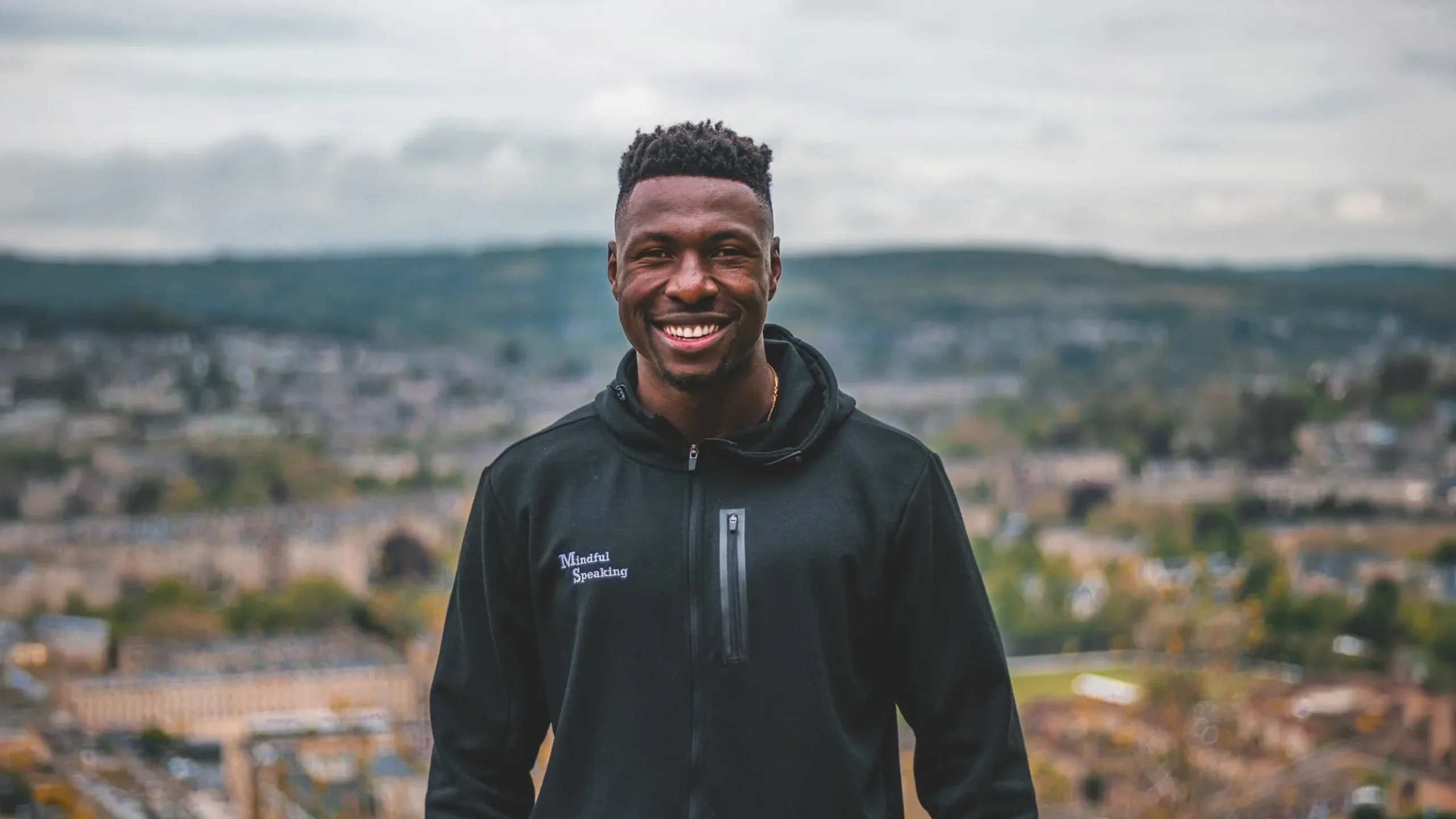
Daniel Edozie represented England at the 2018 Commonwealth Games on Australia’s Gold Coast, helping the men’s basketball team win bronze. He also played professionally for Bristol Flyers and has since turned his experience towards developing the next generation through Bristol Sonics. The youth programme now has four teams across U12, U14 and U16 basketball, with Edozie hoping to establish an U18 pathway and give young players opportunities on and off the court.
Daniel also played basketball in America, where travelling to various tournaments and the link between education, discipline and sport helped shape his coaching philosophy. Away from basketball he works as a mentor in schools.

Factfile
Age 34
Playing career Bristol Flyers
International England, Commonwealth Games: Gold Coast 201
Major honour Commonwealth Games bronze medallist
Role Founder and coach, Bristol Sonics
Coaching focus Youth development, basketball fundamentals and character building
Teams Bristol Sonics has grown from two teams to four, spanning U12, U14 and U16 age groups
Next goal Establish an U18 pathway towards adult and higher-level basketball
Socials Instagram
What has been the unquestionable standout Bristol Sonics highlight?
It’s the journey. At first, we started off with two teams, I was coaching both, then it was three and now we have four teams. We’re in our third season now. Not only has it been a good opportunity for kids to play basketball, but the amount of popularity and interest in this game AND the level of devotion we all put in to growing this programme, for me those are the highlights. The programme couldn’t survive otherwise. The people and the team who came along to make this programme what it is – that must be the biggest thing.
Where do you see the club in five years’ time?
I want it to still be alive – we’ve got great coaching and a good community. I’d also like Bristol Sonics to be attractive not only to kids and parents, but to other coaches from other programmes. And perhaps even other coaches who are then interested in taking some kids from our programme and letting them play elsewhere, for example universities or serious competitive teams.
So is your success opening up other doors to some of your players?
Sending kids to a higher level is a work in progress. We’ve only got one U12 team, two U14s and an U16s. So the next goal is to create an U18s pathway, which would probably lead on to playing at adult level. But that aside, it’s still a pathway for kids who want to stay in the game, whether they play a higher level or not. It’s also about finding the coaches, that’s the biggest thing we need.
How do you find coaches?
It takes time by building relationships. Come the end of the season, some coaches might not be happy with the programme they’re in, so that’s a good time to get to know those coaches and to see if they’d be keen to volunteer their time to work at weekends. Luckily enough I’ve found two great coaches who I’m keen to support, and when I find the third one I want them to take over the younger team. Then I could free myself up to coach the U18s.
What can you tell us about the Portugal basketball festival? How do you envision this will help boost the confidence of some of your young players?
When I was younger we used to travel places to go play basketball. When I was in America we travelled all over the states during the summertime, we were away for two weeks. So with Bristol I just want to bring that part of the game to life: playing tournaments on the road, that sort of thing. It’s also about giving the kids that aspiration to play basketball elsewhere and to understand how to get each other going against some fierce international competition.
It’s an experience that I don’t think many kids would have here at Bristol. I know there was another club – possibly the Storm – who went to Portugal a few years ago. Then last summer, some of those kids moved on I think because the club folded or the main director left. But I think the main purpose is to get the kids playing in a different competition and also to work on relationship building and making memories. Those are some of my biggest values: I want to give kids the best possible experience of playing basketball, whatever that looks like, wherever that is.
That was a brilliant answer. What you just said there I think highlights what the club is about. And we’re focusing on the people behind clubs and what makes them tick and a success…
The biggest thing is volunteers are stepping in and helping – doing the fund raising, the communication, sponsorships, basically doing it all! I don’t have to worry so much about whether the club is running late or is organised, so when it comes to the Portugal trip in June I can just be ready to coach the team. I don’t have to worry about buying my flight ticket andall that kind of stuff because all the fund raising has been done by the volunteers. So I’d like to definitely give a huge shout out to them. My colleague Chelsea as well, who helps a lot, she manages the accounts so without her this programme wouldn’t work either. It simply wouldn’t be where it is. It’s great to know Bristol Sonics is more than just me – I don’t want to feel like I have to do everything.
Luckily enough I’ve found two great coaches who I’m keen to support

As you’ll see again some of the questions towards the end were about a volunteer at the club, someone who could talk about their journey into basketball. Why do they do what they do? Bristol seem to have a large number of volunteers or at least rely on volunteers more so than more established clubs and I think you've highlighted there what the volunteers bring.
Can you talk us through what the club does for youngsters growing up nowadays?
Listen life is more than what happens inside these four lines, but what these four lines are designed to do is to help you build character. My biggest thing – I also work as a mentor in schools outside of basketball – is if I hear any reports from the schools about behaviour then we’re going to have some fast and serious conversations.
I hear in schools it’s not good at the minute. And I say don’t let that be one of the kids that comes to our programme. In America, when I was playing basketball, if you slipped up in class or misbehaved in class it jeopardises your opportunities on the court because if you’re not doing your class work and you’re messing about then you fail lessons. That could impact your grade point average, for example if you have below a 2.0 (this is in America by the way) then you can’t play any sports. You can’t play any sports until you get those grades up. So that taught me that discipline.
It’s great to know Bristol Sonics is more than just me – I don’t want to feel like I have to do everything
The coach was working in the school so any teachers will say ‘Hey, today this student wasn’t doing this, they messed around in class.’ Then come training they won’t be playing basketball. Coaches weren’t going to be nice about it.
At Bristol we build character because it’s more than just about the sport itself. It’s about reputation and identity – you have to think about it like this. You’re representing Europe for your club, your Mum, your family, your teammates. If you’re not doing the right things and misrepresenting everyone around you then you’ll miss out. We take big pride on building character.
If I hear about something that you’re doing on the streets which is leading to negative consequences then I’m going to question you. And if it’s something that is found to be serious and actually puts our process at risk as a programme and individuals teams and coaches, then we’re going to ask you to leave the team, simple as that. It might seem harsh but when people realise how valuable what they have here is, they won’t want to lose it.
Do you notice, in young people today, any differences like more frustration or anger?
Yeah we’ve noticed a bit more frustration but we also work through it too. We don’t just let them play or participate with anger, we encourage youngsters to use that anger in a positive way or we get them to see what’s the problem or do their reflection so you disarm the emotions from the situation.
We definitely have seen a rise in some frustration with participants or with young people within sport in school in general. I guess since COVID, in terms of the inability to socialise which obviously spiked levels of anxiety or just having to learn how to internalise things a bit more and not be able to express it in a way that helps to get it out.
With basketball we encourage kids to be like an actor. Being an actor means you’ve got to express things and you express things that bring the most joy to you, whether that’s learning a new skill, learning how to play defence, establishing basic basketball fundamentals, being around someone who you enjoy spending time with. I think all this helps that internal frustration or anger from experiences they’ve had in the past.
What is it that makes basketball such a universal sport, where people from different walks of life can all take the court at the same time… I think what links basketball to universality is that it has a cool culture. You can play it year round: inside, outside. It’s not like football where you can have toxicity in the crowd. In basketball there’s trash talking going on which is more funny, so it’s an inclusive sport, absolutely an inclusive sport. You can be competing against people from all over the world – different ages, different genders, different ethnicities. As a man you can play with women, which sometimes you can’t do in football, whether because there’s masculinity or a stigma I don’t know.
I also think the history of the game is fascinating, taking into account where it came from in America going from the 60s to the 70s into the 80s and 90s and early 2000s.
And then finally, on a physiological level, when you’re playing sport your body is having to respond to everything right?
Quick reactions, moving forwards, sideways, backwards, second guessing which way to move and all this kind of stuff. There’s so much to appreciate about this game.