


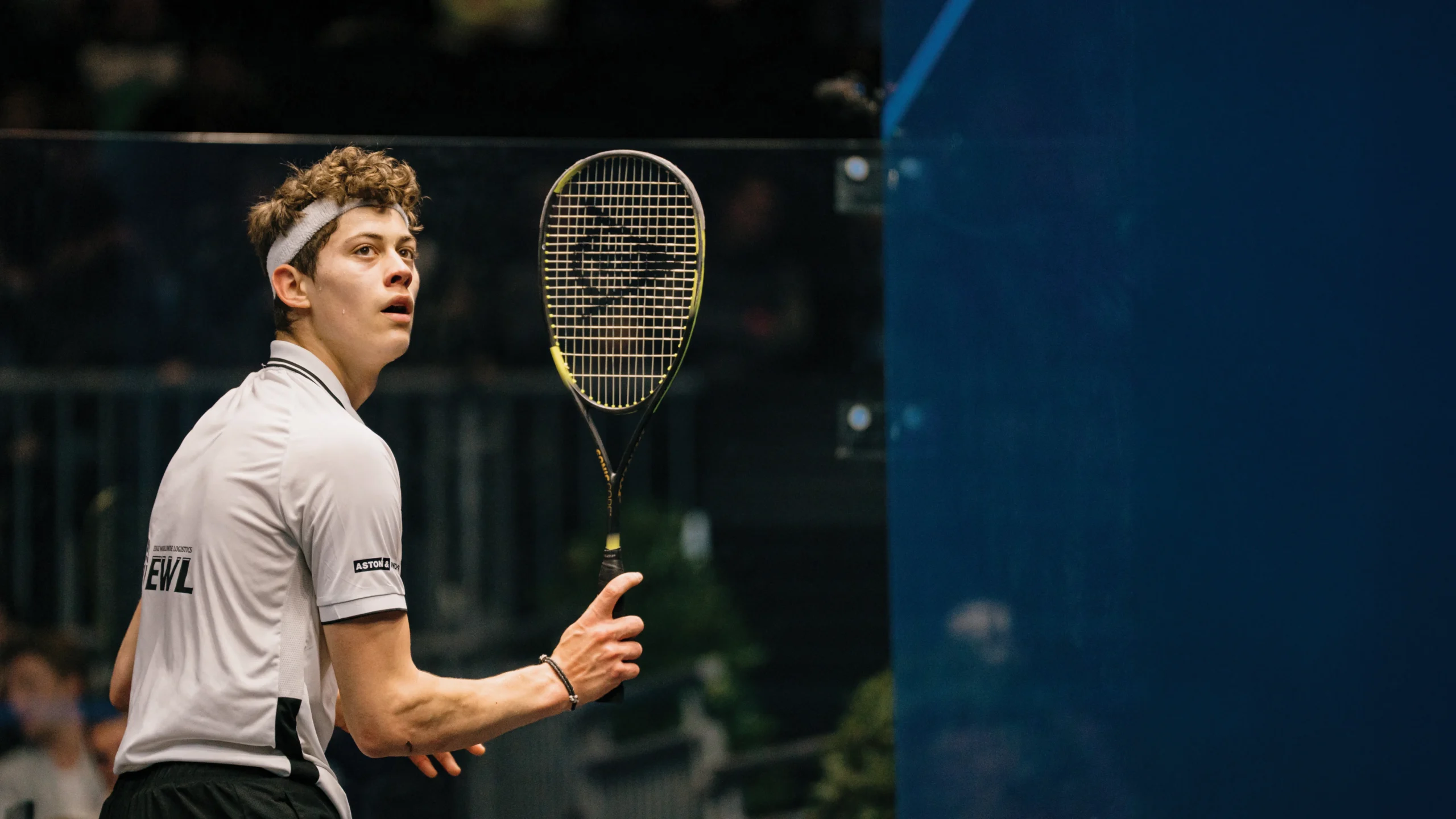
At just 19, Jonah Bryant is already establishing himself as one of the most exciting young talents in world squash. Ranked 13th in the world, a seven-time Professional Squash Association (PSA) title winner, and the first Englishman to claim back-to-back European U19 Championship titles, Bryant’s rapid rise has been matched by his recent call-up to the England senior squad for the 2025 European Team Championships.
Based at West Warwickshire, Bryant’s progress has been driven by relentless discipline, a heavy training load, and a deep understanding of the sport’s physical and mental demands. Having won his first junior championship – an under-11s tournament in Sheffield – only six months after seriously competing in the sport, Jonah’s rise has been testimony to his dedication and passion for the squash. Victory in the Irish Open in 2024 and a career highest World ranking in November 2025 indicate that he’s definitely heading for the top.
EARLY YEARS
Tell us about your first success in your sport?
I won the English Junior Championship at under-11s in Sheffield in 2016. That was my breakthrough tournament. I’d only been playing tournaments for about six months. The biggest achievement – last year when I won the Irish Open. For where I was ranked at the time, it was a big step forward. Not many people would have had me down to do that, so it paved the way for what I’ve done this season.
What was the name of your first sports club?
Corals in Brighton. Sadly it’s closed down now. It was a great place. I was nine when I started playing squash. I’d played tennis since I was five and then picked up a squash racket when I was nine and quit tennis when I was 10. I liked the fast, intense movement around the court, how physically hard and fun it was, you can have much longer rallies in squash, and I used to love sliding and diving around the court. That was the attraction for me.
Who do you admire in the sport now, and why?
When I was younger the guys at the top were Nick Matthew, Mohamed El Shorbagy and more recently Ali Farag. They’re top role models. They all have their different super strengths. Ali, for example, how tough but fair he is at the same time. He sets such a good example. No one has a bad word to say about him and he’s been so successful for so long. Nick Matthew, the pure grit and determination he had on court is inspiring.
GRASSROOTS
What would you say to someone thinking about trying your sport?
Pick up a decent racket and a decent ball and just go down with one of your friends and have a good knock. I’m sure you’ll enjoy it. It’s a good workout, it’s good fun, and you can have some long rallies. Just give it a go. It’s quite difficult at the start, especially if you don’t have the right ball. But if you have a bouncy ball, I’ve never seen anyone go on court, run around, hit a ball against a wall, and not enjoy it.
What do you wish you’d known when you first started out?
There’s nothing that’s really surprised me. One thing I’ve found since going pro is playing better players, it really shows how you have to be perfect in all areas to beat these top guys. It’s a lot more complex what they’re doing on court than you may realise from just watching. They don’t give you anything, you’re under constant pressure, they don’t give you easy mistakes. You have to work for every point.
HEROES
Which sportspeople do you admire now, and why?
There’s a UFC fighter called Khabib Nurmagomedov. The way he carries himself, he’s silent but deadly, and he’s extremely disciplined. He’s probably one of the best fighters ever. I wish I could have his discipline!
TRAINING
How often do you train?
About three times a day. Once in the morning, once in the afternoon, once in the evening. I maybe have one rest day, but that’s just lighter stuff like solo practice.
Describe a typical training session
9-12 that will be a lot of warming up and stretching and then some squash. Then I’ll be back at 3pm for a hit and a gym session. And then the evening will be solo practice. It’s just me and one ball and a lot of hitting.
What is your favourite training session/exercise/drill?
I like playing practice matches. That’s what I love about the sport, it requires so much skill but you’re getting a great sweat on at the same time. Practice matches are open, you can play normal squash, express yourself, you can be more aggressive and attacking than you would in a normal match or you can work on shots, and you’re pushing yourself physically. I play a lot with Simon Herbert, he trains at West Warwickshire with me. He’s notorious for a practice match.
Best piece of advice from your coach?
It’s so hard to pin down one piece. In general, probably just the clear understanding he’s given me of how to play the game. That’s been the most beneficial. The thought-process towards the game.
Which part of your body suffers the most in your sport?
Everything. Probably around your glutes and hips, the top of your hamstrings and lower back. They take the brunt of things. You get a lot of soreness in those areas.
What’s the toughest thing about being an athlete?
I’ve not got much to complain about. I love what I do. I’m very privileged and lucky to be able to go round the world doing what I love. Sometimes you do get to points where you’ve done too much, you’ve travelled from place to place to place, and you’re tired. That’s when you’ve got to make sure you’re still putting the work in, getting up on time, and doing what’s required to maximise your potential. So maybe sometimes when you’re feeling a bit flat, it’s tough to make sure you’re still doing the work required.
But we have a great group of mates here at West Warwicks. There’s four or five of us training together every day. We have lunch together, play FIFA together, play golf together, we train, play matches. We train hard but it’s also great fun. I love the day-to-day life. Sometimes I miss it when I’m at tournaments, just being at home with the boys in Solihull.
When training is harder than anything you’ll face in a match, it gives you real confidence
MOTIVATION
What’s your training mantra?
That’s where it just comes down to discipline. You’re not always going to be motivated. No one’s motivated 24/7. It’s about having your discipline. And that’s where Khabib comes in. Someone like him would never go to sleep late, never wake up late, never eat the wrong foods. Everything’s on point and he trains ridiculously hard. It’s just non-stop discipline.
And when you’ve got four or five of you who want to put the work in like we’ve got at West Warwicks, it’s a lot easier. You don’t have an excuse. When everyone else is doing it, you can’t not do it, so we all drive each other.
How do you keep going mentally when things get tough?
I had a lot of tournament in spring. Being where I’m ranked now, I got into a couple of tournaments off the reserve list so instead of having two tournaments in four weeks, I had four in three different countries. You do just feel like you’re going place to place, you’re not in your own bed so you’re not sleeping as well as normal. There’s a lot of travel. It can get mentally draining. When I came back, I took a day, day and a half off completely to just reset and refresh. Sometimes that’s just what you have to do, have a complete rest for a day.
Do you have a mental exercise you complete or something/someone you think about?
In matches, for example, I just try and have a clear game plan. And every match is different. Sometimes you do feel flat and it’s difficult to get yourself going, but you just have to hype yourself up and get some adrenaline going. But that’s something I find so interesting about the sport. You’re never in the same position twice and it’s about who adapts best.
What’s been your greatest sporting moment so far?
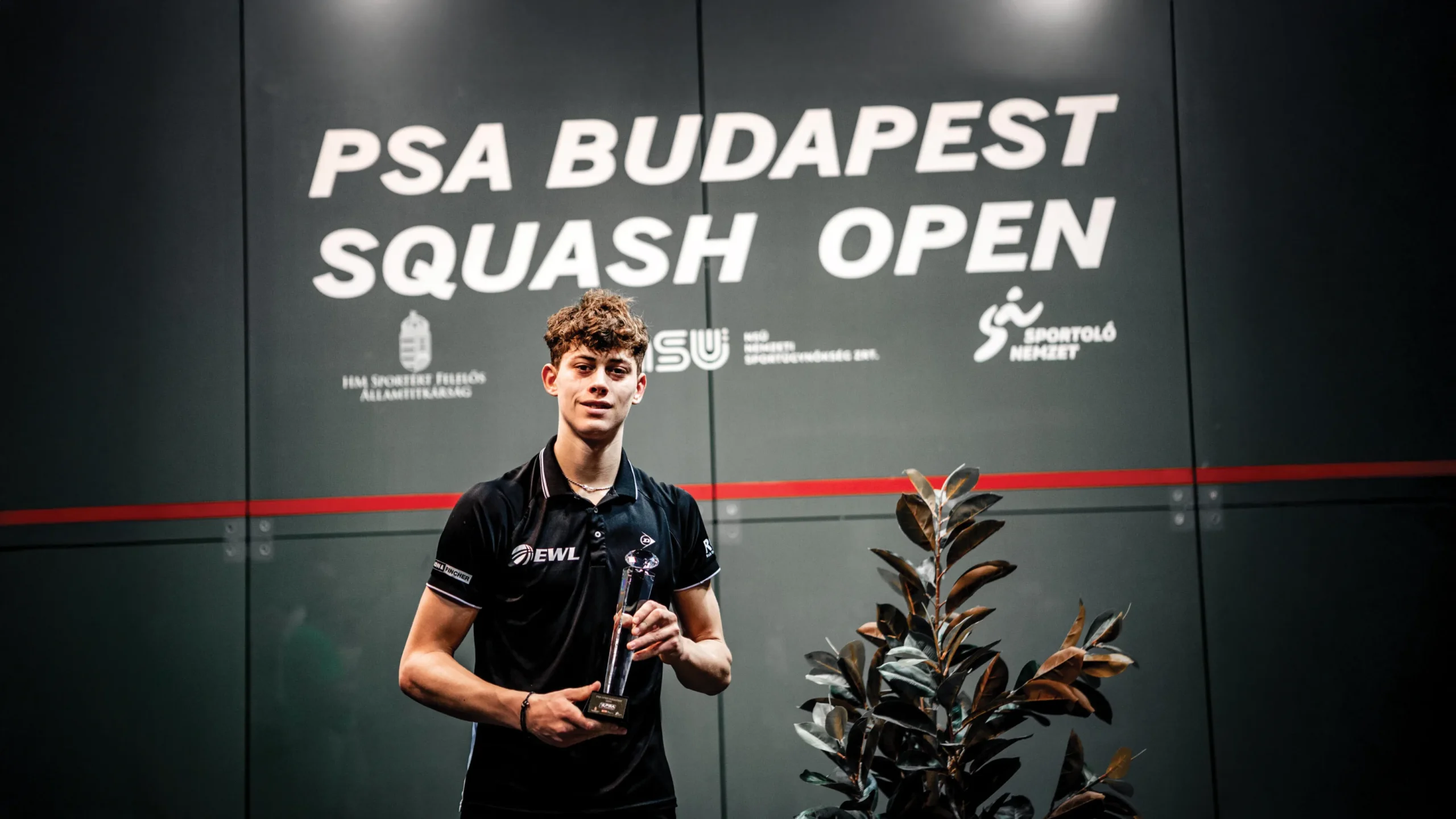
The biggest tournament I’ve won was the Budapest Open in September 2024. Nothing major yet but hopefully there will be in years to come.
How do you deal with defeats/set-backs?
It’s a learning curve. I take losing quite badly but you have to lose. No one comes in and goes straight to the top. You’ve got to reflect on why you’ve failed and try and improve that aspect of your game and make sure you don’t fail the same way again. That’s my process at the moment. I’m never going to be able to accept being a loser but sometimes you do have to accept that some players are better than you at the moment. I like to think that anyone around my level or if there’s a 50:50 chance, I’ll beat most people. From the people who beat you, you have to learn what they do better than you and improve.
What do you do to freshen-up your training routine?
It can get tedious when you’re training three times a day. Any variety you can have is great. I mix it up with different training sessions. In a solo practice, if you do the same one every day, it’s really boring, so I vary that a lot. Some will be very disciplined and strict, others are quite random and I’ll be trying different shots or doing match play. Variety is so important. One of the things I’ve noticed from playing the top guys is that their lengths are better than mine, so I’m practicing my weight of shot, getting the ball to the back of the court, better depth on shots. There’s a lot of focus on that at the moment. But I’ll get the variety from practicing the shot in different ways.
NUTRITION
What performance foods do you enjoy most and why?
I’m not the most disciplined with diet but I have three or four good meals a day, and sometimes a naughty snack in the middle of the day. As long as I’m getting a lot of proteins and carbs in with the some veg, hopefully I’ll be alright. I love spicy food. I have spice with everything. I’m not a good enough cook to make good food without adding a spicy sauce.
What are you go-to feel-good treats?
I love a curry, an Indian curry. We are spoiled for choice in Birmingham – my order’s different at every curry house. If I’m in Shababs in town, there’s a balti dish which is quite spicy. You can’t get it anywhere else.
How does nutrition improve your performance?
I do make sure I’m getting the right amount of protein and carbs and you can really measure that by how you’re feeling within yourself, whether you have enough energy and stuff. If you’re training hard and maintaining the same weight, you’re fuelling your body well, and if you’re eating plenty of protein, your muscles will recover faster. I just have those few basic rules to follow. Sleep is massive too – that’s the biggest form of recovery! Sleep, nutrition, and hydration.
Have you got a favourite recipe you can share?
It’s boring but chicken and rice with Nando’s sauce, some avocado – you can’t go wrong with that.
TOP TIPS
Any go-to fitness tips you can recommend?
Running on a treadmill is the hardest for form of fitness for me. Intervals on the treadmill, up to 45 or an hour. Anything where you’re going to your max heart rate and staying there for a while. With my coach Rob Owen, he’ll have two people on court and he’ll be feeding balls to you for 30 shots all around the court and he’s got great racket skills so he puts you under a lot of pressure and then when you’re supposedly resting, you’re doing an exercise like squat jumps or shuttle sprints or lunges. It makes your legs very heavy. It’s pretty brutal. It’s good training because it’s harder than anything you’ll do in a match. I put a heart rate monitor on and for 47 of the 70 minutes, I was in my max zone. But when you do that in practice, it gives you a lot of confidence going into matches. I’ve done these sessions, I can cope with anything.
What’s the hardest skill in your sport to perfect?
Playing tight off tight, so when someone plays a really tight shot down the wall, being able to hit it back down the wall. That probably takes the most skill.
Advice on preparing mentally to get involved
If you’re playing to a top, top level, just do something ridiculously hard where you’re challenging your mind more so than your body. It pushes you through barriers you didn’t think you could push through and once you’ve done that in the gym when there’s no one there, you’ve got the confidence in matches to push through that extra bit of pain.
FUN STUFF
Can you share three quirky facts not many people know about you
I’m rubbish at fun facts but here goes…
I love playing golf. I haven’t got a handicap yet, that’s a summer job.
I love having a good laugh with my mates.
And I love winning. That’s as fun as you’ll get with me.
Are there any sports you aren’t good at?
Compared to proper golfers, I’m not good, but I’m pretty lucky with hand-eye coordination, so I’m fairly good at most sports. I have played real tennis and rackets – they’re pretty uncommon sports. They’re old, posh sports that you get in really nice clubs.
How do you unwind away from sport?
Golf. On a sunny day, I love going around a course. I’m pretty lazy but one thing I wish I’d done at some tournaments is going to see the cities. Going forward, I should put more effort into that, but only once the tournaments are over!
What’s the strangest thing that’s happened during competition?
It’s never happened to me but sometimes you’ll turn up to tournaments and your bag won’t arrive, so players have to borrow rackets or shoes or kit off other people. That’s not the best. I did once have to borrow a racket because all of mine broke, but it was only a French league match so it wasn’t the end of the world. I still managed to win.
Jonah Bryant
Jonah wants to beat as many people above him as possible and would love to get a top-10 win. He reached a career high ranking of 13 in the world on 24 November 2025, keep up to speed with his progress.