




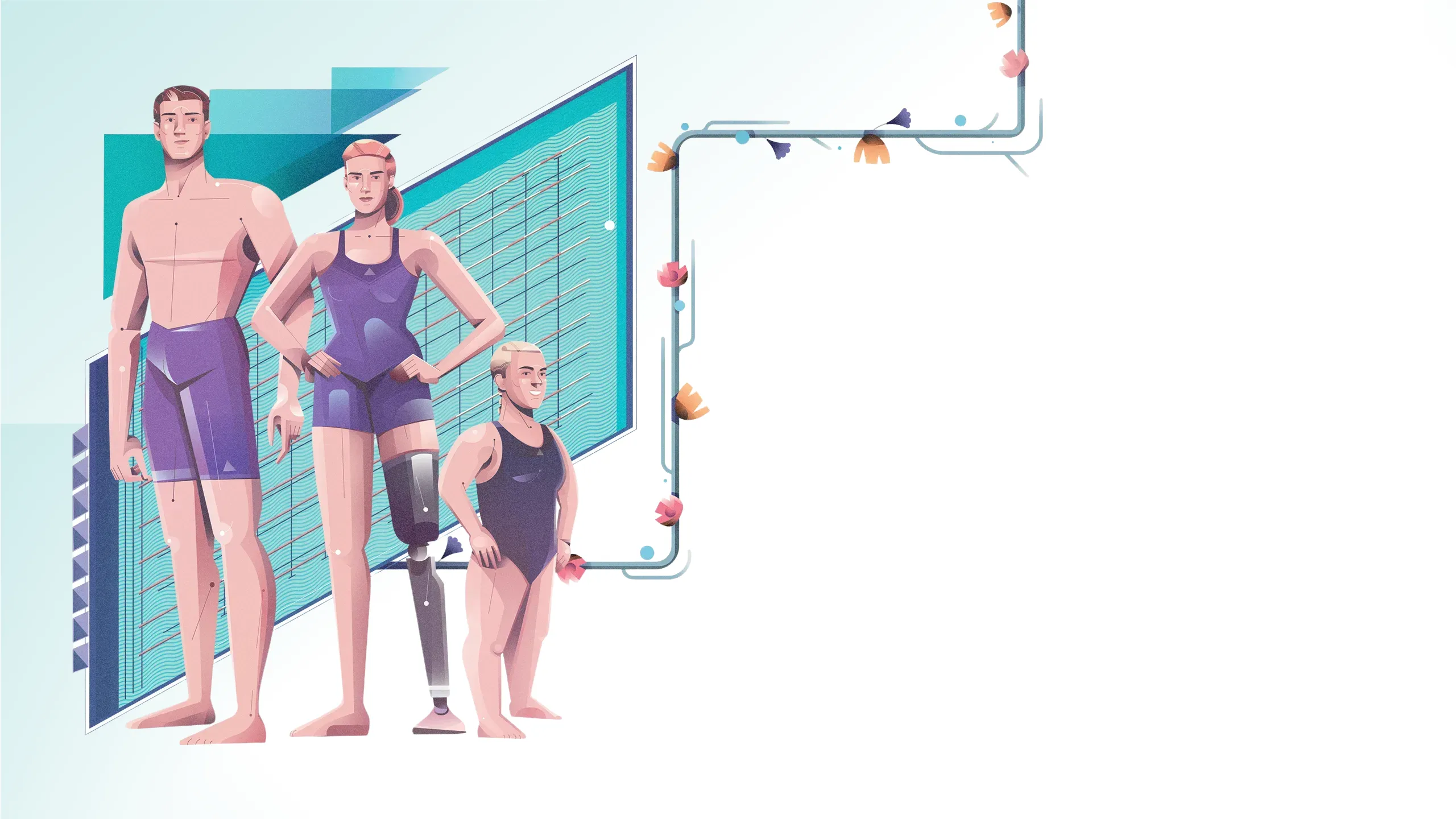
 ged just 22, Maisie Summers-Newton already has five Paralympic medals. The swimmer made her Paralympic debut in the eerie Covid-era surroundings of Tokyo, taking gold in both the 200m individual medley and 100m breaststroke. Three years later, a frenzied 17,000-strong crowd at Paris’ La Défense Arena provided Maisie with an overwhelming atmosphere but the cacophony didn’t thwart a successful defence of both titles, plus a bonus bronze in 400m freestyle.
Maisie’s feats over two Games make her one of Britain’s most successful active Paralympians, but while talk of those hard-earned rare medals evokes fond memories, Maisie’s widest smile comes when talking about the people she swims with. Joining her in the Parisian pool last summer were her teammates from Northampton Swimming Club.
“It was so lovely to make Paris together with Bruce [Dee], Scarlett [Humphrey] and Eliza [Humphrey]. We made a pact throughout the three years leading into Paris together, it helped my journey so much. And that was down to the club,” said Maisie.
That this camaraderie represents one of her highlights from Paris is testament to the ethos of Northampton Swimming Club, where individual sport is infused with collective endeavour. And it’s why this representation on the world stage was nothing new for the club based at Mounts Baths. Northampton’s Ellie Robinson, Zara Mullooly and William Perry joined Maisie as part of ParalympicsGB in Tokyo, five years after Robinson had won gold in Rio.
Andy Sharp, who is the director of swimming and head coach at Northampton Swimming Club, says it stems from the legacy of London 2012. “Ellie Robinson was probably the catalyst for the club’s focus on para swimming,” he said. “She went to watch the Paralympics in 2012 and four years later she was representing her country in Rio.”
It’s a similar story for Maisie, whose formative memories as a 10-year-old at the London Aquatics Centre spawned a sporting dream. “For me, to see people with my disability absolutely smashing it and to look up to people like Ellie Simmonds made me realise that this was what I wanted to do.”
Maisie, who has dwarfism, found herself drawn to the pool. Her grandfather was the president of the county swimming association and it was the sport she felt was best suited to her. “As someone with a disability, swimming was the only sport that had a low impact on my legs and enabled me to keep fit and active. I loved it so much. It was so freeing.”

“As someone with a disability, swimming was the only sport that had a low impact on my legs and enabled me to keep fit”
MAISE SUMMERS-NEWTON
After learning to swim at Wellingborough Swimming Club, Maisie was scouted by Northamptonshire Sport’s Graeme Wilson, who recommended Maisie and Ellie Robinson to Swim England. “Without that one day, my whole life could be completely different,” reflected Maisie.
She joined Northampton and began training eight times a week. Like any budding athlete, it meant sacrificing some of the joys of adolescence. “Getting up at four in the morning and training every evening for two hours takes away all that social time but I was so dedicated to get to the Paralympic Games. My social group was my swimming friends. As long as we were all swimming together, I was happy.”
Northampton’s holistic approach to coaching the person as well as the athlete struck a chord with Maisie, who remembers Zoom cooking lessons and quizzes hosted by club coaches during lockdowns. She also described Northampton Swimming Club’s policy of integrating both disabled and able-bodied swimmers as being ahead of the curve and one of the reasons the club has developed a consistent stream of Paralympic stars.
“I love being in an integrated environment. If an able-bodied swimmer is doing 400m, I’ll do 300m. So I do about 75% less than everyone else but that allows me to be in the same lane as someone. I’m never isolated.
Inclusion That Delivers
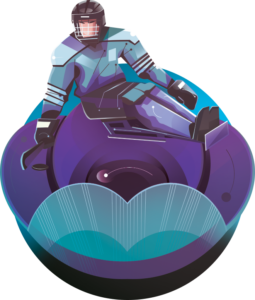
Several UK clubs mirror Northampton Swimming Club’s inclusive pathways. Formed in 2012, Leeds Rhinos Wheelchair Rugby League welcomes players of all backgrounds and abilities, powering the team to multiple Super League titles. Sheffield Steelkings are among several in ice hockey fielding para teams where disabled and able-bodied players compete side-by-side. At Harlow Athletics Club, an integrated coaching model has propelled a diverse range of talent to the international elite, from Paralympic medallist Kare Adenegan to Olympian Andrew Osagie.
“It was the first time I’d been so integrated in a club. At Wellingborough, I was the only disabled person they’d ever had so they didn’t really know how to best adapt. That’s where Northampton are really ahead of the game.”
Northampton’s success with para athletes has resulted in a swell of interest in their coaching methods. But for Andy, who became emotional when Maisie retained her titles in Paris, it’s about adapting to individual needs while expecting the same commitment across the board.
“We’ve given a bit more opportunity to athletes with impairments for them to flourish and thrive, but we don’t coach them any differently,” he said. “There are the same expectations. They have to do all their sessions and they have to work hard.
“Obviously, we adapt things. But just because someone’s got an impairment doesn’t mean you let them take it easy. To go to the Paralympics these days is just as hard as getting to the Olympics, it’s incredibly competitive. And to be the best, you’ve got to work the hardest.”
Both Andy and Maisie believe that some coaches are daunted by the prospect of working with para athletes. “There are so many coaches that don’t really know what to do with their para swimmers. That comes down to coaches’ education and making them more aware,” said Maisie.
“I’ve had to learn new skills, it’s really brought my coaching on,” explained Andy. “One of the worst excuses I hear is, ‘I’ve never coached anybody like that before.’ If Adam Peaty walked through the door and said, ‘I want to join your club’, the coach isn’t going to say, ‘Sorry, I’ve never coached a world record holder before.’
“Just because you’ve never coached someone with one arm, or an intellectual or visual impairment, you shouldn’t be scared of coaching them”
ANDY SHARP
“Just because you’ve never coached someone with one arm, or an intellectual or visual impairment, you shouldn’t be scared of coaching them. They might not be able to swim as far but they’re still aiming to be the best that they can be. So provide an environment for them to achieve that.”
Such is Northampton Swimming Club’s reputation that para swimmers are moving here from other clubs in the hope of benefiting. But it’s not all going swimmingly. Not only has the number of club members failed to return to its pre-Covid peak, but the number of hours they’re granted in the pool is also dwindling. “We used to be able to access the pool eight times a week, which was amazing for balancing school and getting disabled people into sport. Now there are only four sessions,” said Maisie.
Andy also broached the thornier topics related to running a club. “We don’t get any financial support in the sense that we’re not a council programme. We have to apply for sponsorship and we’re self-funded through our membership,” he said, praising the many volunteers who keep the club alive. “A swimming gala needs 20 to 30 people. We’re heavily reliant on volunteers to give up their time.”
However, the future in the pool is bright. While Maisie is yet to commit to defending her titles at the 2028 Games in Los Angeles, she is keen to carry the club’s influence forward for the next generation. As well as taking part in club disability workshops off the back of the 2024 Paralympics, Maisie is even willing to help her successors break her own records.
“There’s a swimmer with dwarfism at Northampton called Rose Webb who’s around 13, and I can see a reciprocation of what I had when I was her age. I was comparing myself to Ellie Simmonds’ times, now she has the same for my records. It’s lovely that she could be the future of para sport. It means a lot to have her so close to home.”
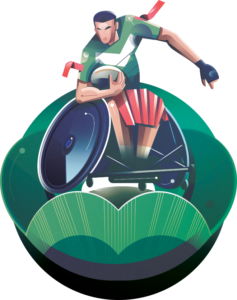
London’s Paralympic legacy
Just like Maisie Summers -Newton, many Paralympic greats were initially inspired by 2012 Games. Kare Adenegan, often excluded from school sport due to her cerebral palsy, was just 11 when London 2012 showed her that sport could be for her. Since then she’s become a multiple T34 medallist across three Games. Andrew Small was so awed by Mickey Bushell’s gold in the T53 100m that he got tickets to the 2012 Games, witnessing David Weir and Jonnie Peacock win gold. He vowed to emulate them, and followed T33 bronze in Rio with gold in Tokyo.