










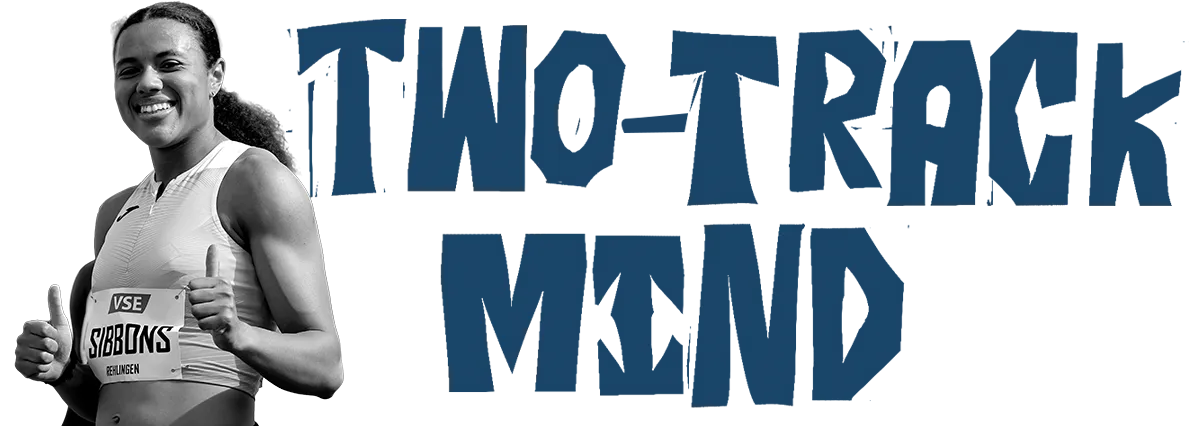
Being one of Britain’s best sprinters doesn’t guarantee a payday. When funding was pulled just as her career took off, GB sprinter Aleeya Sibbons didn’t quit – she got a job. Here’s how she balances full-time work with chasing an Olympic dream…
The very next day after Abbi Pulling <INSERT LINK WHEN LIVE> made history in Belgium, some 400 miles east of Spa, Great Britain’s Aleeya Sibbons finished second in the 200m in Prague’s Juliska Stadium. Her time of 23.51 was her season’s best, coming just weeks after she clocked a 100m PB of 11.21. At 23, Aleeya is an athlete in the form of her life with a strong chance of heading to the LA Olympics in 2028.
But that still feels a long way away for Aleeya. To race in the Czech Republic she’d requested time off work as a retrofit designer in Bath, the city she moved to from London in order to study architecture. For foreign meets, Aleeya packs her laptop alongside her spikes.
“I found a brilliant company that allows me to do that,” she says, adding that it’s not unusual for her to travel Sunday, compete Monday, and return to work Tuesday. “I work from home three days a week and in the office two days a week, but my hours are pushed slightly later so I can train in the mornings.”
Whereas it might be jarring to learn that an international athlete is working full-time in order to fund their Olympic ambitions, for Aleeya it’s nothing new. In her first year at uni, she worked behind a bar at the local rugby club. “It definitely wasn’t my kind of thing, it was just for a bit of extra cash. I’d moved away from home so I was just trying to support myself.”
“There’s nothing more valuable than time… I had to rush to my next job”
But while it might be the norm for this East Londoner – a hot prospect since winning 100m gold in the English Schools Championships – it’s not meant to be. Unlike motorsport, athletics was allocated £20.45m from UK Sport for LA 2028.
Show me the money
The UK Athletics World Class Programme distributes that via a tiered structure: podium contenders get more than athletes earmarked for a relay spot, for example. So while this flagship Olympic sport is in better financial shape than others, overall funding has been cut from Paris 2024, down from £22.18m, and top-performing athletes are not assured of a penny. “There are very few spots on that UKA performance list. I’ve been on it, I’ve been dropped from it, and now I’m trying to go back on it,” she admits.
In much the same way that Abbi’s progress was curtailed by a crash bill, the spectre that haunted Aleeya’s career came in the shape of a moon boot. After a 2023 season full of promise, Aleeya’s joy of being funded was short-lived when an ankle problem required 10 months in recovery.
“Unfortunately they dropped me and put a new person in,” says Aleeya, though with the grace to understand the decision. “I would never want to be on the funding where I’m not competing because of injury and someone else needs it more than I do.”
In May 2025, Aleeya returned to claim 100m gold for Bath at the 2025 BUCS Outdoor Championships in her final year as a student. But graduation came tinged with unease. A Santander Sports Scholarship, to support athletes alongside their academic studies, would come to an end, meaning Aleeya would once again find herself competing against rivals on an uneven track. For while funded athletes train knowing their kit is provided and their expenses paid, the biggest advantage that money buys is the intangible.
Juggling act
“As an athlete, there’s nothing more valuable than time. Where they could go to training when they liked, rest, and do proper recovery, I had to rush to my next job. They don’t have to work full-time jobs. Athletics is their full-time job.”
An easy narrative would be that Aleeya is enjoying the best season of her career in spite of her parallel tracks, but while she’d undoubtedly prefer to be back on the athletics payroll, she’s found unique ways to make her situation work to her advantage. The first is an ability to turn frustration into inspiration.
The 9-5 club
Aleeya isn’t the only elite athlete clocking in to clock PBs.
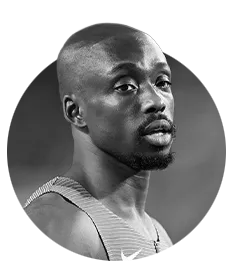 Eugene Amo-Dadzie
The world’s fastest accountant took up sprinting at 26 and ran 9.93 seconds aged 30, all while working full-time as a chartered accountant.
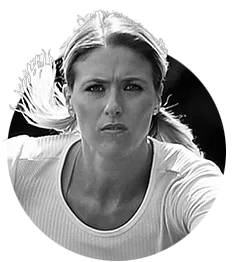 Jessie Knight
The GB 400m hurdler taught at a primary school while chasing Olympic qualification, marking books between sessions on her way to Tokyo.
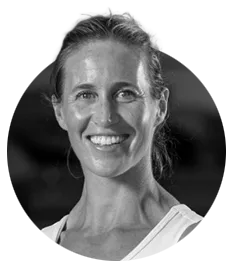 Helen Glover
A PE teacher when she answered UK Sport’s Sporting Giants talent call, she balanced the classroom with the boat before rowing to gold at London 2012.
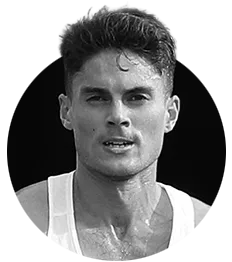 Phil Sesemann
The NHS junior doctor placed 7th on debut at the 2021 London Marathon, the highest-placed Brit, having fitted training around shifts at Leeds’ St James’s University Hospital.
“I use it as more of a motivator. If I can beat you without all the help, it means I’m going to be even better when I am funded.”
The other aspect is that – in contrast with her reluctant pint-pulling – Aleeya genuinely loves her job. Tasked with upgrading properties to make them more sustainable, it follows a punishing four-year architecture degree that demands a commitment on a par with anything in sport. Such is the level of immersion expected that Aleeya was advised not to mention athletics during her application, lest her future professors question her dedication. “The studio is open 24/7 for a reason. You do all-nighters.”
And while Olympic medals remain her ultimate ambition, her job in Bath is no side hustle. “It sounds weird, but I enjoy having something to do outside of athletics. I’d love to start doing my own retrofit property developments. A career in athletics isn’t going to last until I’m in my 60s. So it’s important that I find a backup.”
It’s rare to hear elite-level athletes talk with such clear-headedness about a post-sport career, especially in a tone that isn’t laced with dread. But it’s a mark of the pragmatism that has enabled Aleeya to thrive in two demanding spheres, using one to counteract the demands of the other.
“There’s all this pressure in the competition environment. If I spend the whole time thinking about that, I might be more nervous. But if I have work going on as well, anything that takes my mind off it and makes me more relaxed, I prefer that.”
Aleeya Sibbons
British sprinter specialising in the 100m and 200m, competing for Newham & Essex Beagles. A European U20 and U23 relay champion, she won bronze in the 4x100m at the 2024 World Athletics Relays. Sibbons studied Architecture at the University of Bath, graduating in 2025, and now works full-time as a retrofit designer in Bath while continuing to compete at the top of British sprinting, with her sights on selection for LA 2028.